
Unilock General Contractor in Whitney: A Homeowner’s Guide
Unilock’s EnduraColor finish can hold its color for decades, but polymeric sand failures in Whitney’s dry heat are the number-one reason homeowners call a second contractor about 18 months after installation. The pavers themselves rarely fail. What fails is the joint sand, the base, and the drainage plan behind them. This guide covers what a Unilock contractor in Whitney should actually do differently, and how to tell the difference before you sign anything.
If you’d rather not sort through installers and spec sheets on your own, call (833) 570-8789 and we’ll walk you through your options.
What makes Unilock pavers different from standard concrete pavers?
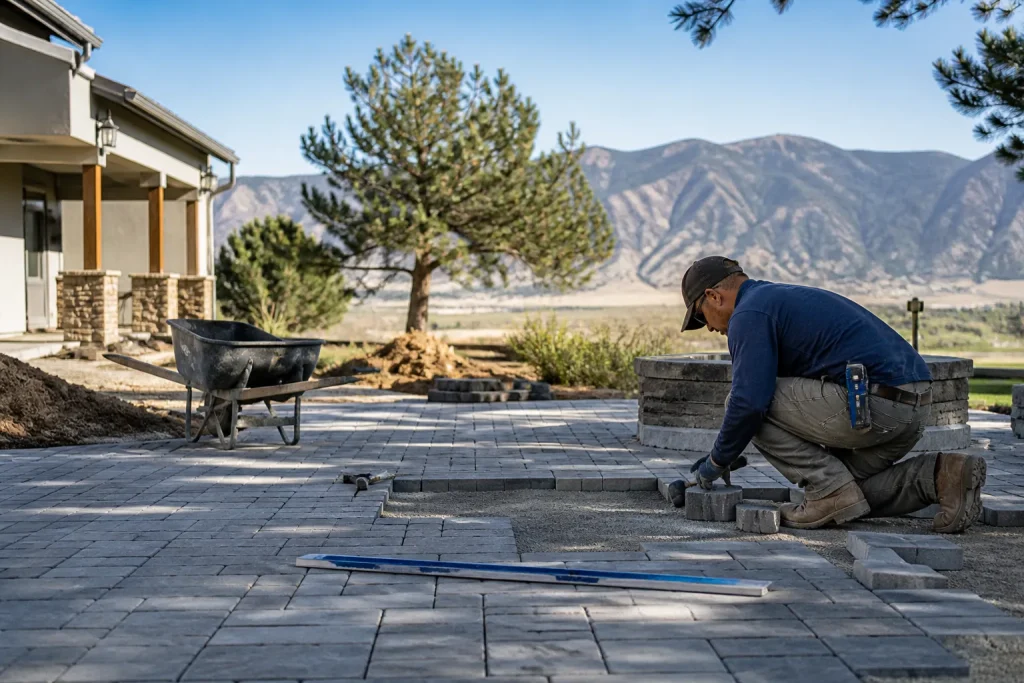
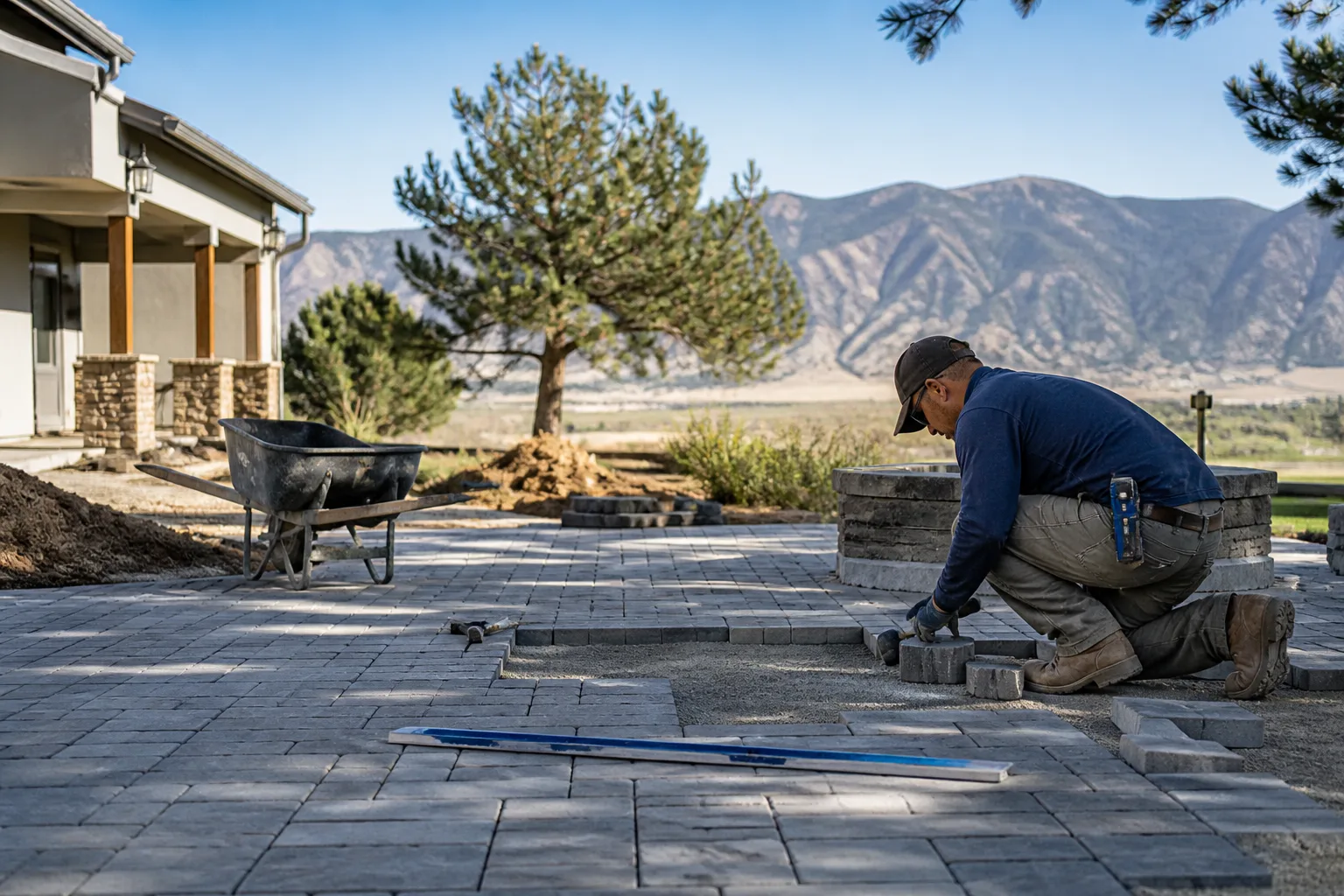
Unilock is a premium segmental paver manufacturer, and the gap between their line and a standard big-box concrete paver shows up in three measurable places: surface density, color technology, and dimensional tolerances. Standard pavers are often a single-pour concrete with a pigment mixed throughout, which fades as the surface wears. Unilock’s EnduraColor products use a concentrated color layer bonded to a denser base, so the wear surface stays consistent instead of exposing aggregate over time.
What that means in practice:
- Compressive strength: Premium Unilock pavers are engineered well above the load ratings of typical retail pavers, which matters on driveways where vehicle weight is concentrated.
- Water absorption: Lower absorption rates reduce freeze-thaw and salt damage, though Whitney’s climate stresses pavers differently than a cold-weather market.
- Dimensional consistency: Tighter tolerances mean narrower, more uniform joints, which is exactly what makes polymeric sand work.
You’ll pay more per square foot for Unilock than for a commodity paver. In the Whitney market, you should expect that premium to be visible on your written quote as a line item, not folded into a vague lump sum. A contractor who won’t itemize the paver cost line by line is telling you something.
Why polymeric sand fails in Whitney’s dry heat (and how to spec it right)
Polymeric sand failure is the most common callback we hear about from Whitney homeowners. In low-humidity Nevada conditions, the sand’s binder needs moisture to activate and cure, and if the installer mist-cures it once on a 95-degree afternoon, the top skins over while the joint stays soft underneath. A few rain cycles later, you’ve got sand washing out of the joints and pavers starting to rock.
What a proper install does:
- Fills joints to the right depth. Roughly two-thirds up the paver edge, not flush with the surface, so the sand locks into the joint instead of sitting on top.
- Compacts before activation. The joint sand gets vibrated into the joints while dry, not just swept in.
- Mists in two light passes. Saturation is the enemy. Two gentle passes with a pause between them lets the binder soak in rather than run off.
- Waits for the right window. Installing polymeric sand when rain is in the forecast, or when the surface is hot enough to flash-dry the water, is how you get a failed joint.
Polymeric sand selection matters too. Higher-binder formulas are more durable but harder to activate correctly. If you’re in Whitney and your installer can’t tell you which product they’re using and why, ask again.
Pattern planning for drainage in Whitney’s flash-flood rain events

Whitney sits in a desert climate, but “desert” doesn’t mean “no water.” The region gets occasional high-intensity rain events where several inches fall in a short window, and a paver patio or driveway that was pitched wrong becomes a small lake. This is where pattern planning and grading meet.
A Unilock contractor planning a Whitney installation should be thinking about three things at once:
- Slope: A minimum pitch away from the house, roughly 2% for surface drainage, so water leaves the hardscape instead of pooling against the foundation.
- Pattern: Herringbone and running-bond patterns interlock better than a simple stack bond, which resists lateral movement when water loads the surface.
- Base: A compacted, properly graded aggregate base is what actually carries the water and the load. Unilock’s own installation specs call for a specific base depth by application, and a contractor who skips base depth to save on material cost is setting you up for failure.
We’ve seen patios that look beautiful at handoff and fail within two summers because the base was under-compacted and the slope was flat. The pavers weren’t the problem.
What a Unilock contractor should do differently than a generic paver installer
A generic installer treats every paver job the same. A Unilock contractor works to the manufacturer’s written installation spec, because Unilock’s warranty terms depend on it. That’s not a marketing line; it’s a paper trail that matters if something goes wrong.
Here’s the difference:
- Commissioning the base correctly. Excavation depth and base compaction to spec, not eyeballed.
- Following the manufacturer’s joint sand spec. Using the approved polymeric product the manufacturer lists for the application.
- Documenting the install. Photos of base prep, compaction, and finished joints before the pavers get sealed or the furniture goes out.
- Handing over the paperwork. Product spec sheets, warranty documentation, and a written record of what was installed.
If you want the bigger picture on how a full Whitney remodel comes together around outdoor work, our General Contractor in Whitney page covers how hardscape fits into the rest of a renovation. And if the project grows into an interior remodel, our Kitchen Remodeling in Whitney and Bathroom Remodeling in Whitney pages explain how we handle those.
How photo documentation protects you for warranty and insurance

Most paver failures turn into arguments about what happened underground. Photo documentation ends those arguments. Before-and-after photos of the excavation, base, compaction, and joint sand create a timeline that supports a warranty claim and can help when you file an insurance claim after a storm.
We run every job under The Relay Visibility Guarantee: a written price before any work starts, a live arrival time, and before-and-after photo updates. If your walkway shifts in year two, we have the record of what was under it when we finished. That’s the 365-Day Done Right Promise in practice – if something isn’t right, we make it right, and the photos are part of how we do that without an argument.
Our technicians have up to 21 years of experience, and background-checked, uniformed crews show up on every job. You know who’s walking onto your property before they arrive.
When to call a pro
You can spec pavers and polymeric sand yourself, but base preparation and grading are the part most homeowners can’t do safely or accurately. If your patio is going against your house, a bad slope or an under-compacted base can send water into your foundation. That’s a much larger repair than the paver job would have cost in the first place.
If your existing patio or driveway is showing rocking pavers, sand washing out of the joints, or ponding after a rain, those are symptoms worth having a professional diagnose before any resealing. Call (833) 570-8789 for a free estimate.
Related services in Whitney: our Sawyer Remodeling Whitney home page has the full scope of what we handle, and our General Contractor in Whitney page covers hardscape and outdoor work as part of a larger project.
The Bottom Line
Unilock pavers are a premium product, and the reason they fail in Whitney usually isn’t the paver. It’s the polymeric sand, the base, and the drainage plan. A Unilock contractor worth hiring works to the manufacturer’s installation spec, uses the right joint sand for a low-humidity climate, plans the slope and pattern for flash-flood rain, and documents the whole job with photos that protect you later.
If you’re in Whitney and want a written price before any work starts, Sawyer Remodeling Whitney offers free estimates. Call (833) 570-8789 and we’ll take a look.
Frequently Asked Questions
Premium Unilock paver installations typically run higher per square foot than commodity concrete pavers, and the final number depends on paver line, base depth, pattern complexity, and site access. You should receive a written, itemized quote before any work starts, with the paver cost shown as a line item. Call (833) 570-8789 for a free estimate specific to your project.
Polymeric sand usually washes out because it was under-activated, over-saturated, or installed in the wrong weather window – all common in Whitney’s dry heat. If it keeps washing out, the joint depth or compaction underneath may also be wrong. Call (833) 570-8789 and we can take a look at the joint and base before you pay for another resealing.
It shouldn’t. We put the price in writing before any tool is picked up, so the number on your invoice is the number you approved. If something unexpected is discovered underground during excavation, we document it and talk to you before any change is made. Call (833) 570-8789 to schedule your free estimate.
Most residential patios and driveways take several days from excavation through joint sand activation, depending on square footage, pattern, and base prep. Curing the polymeric sand takes additional time before you can walk on it or bring vehicles across it. Call (833) 570-8789 for a timeline specific to your property.
Written by the team at Sawyer Remodeling Whitney.
Need Construction Help?
Call Sawyer Remodeling Whitney - licensed & insured, here with fast after-hours help in Whitney.
(833) 570-8789