
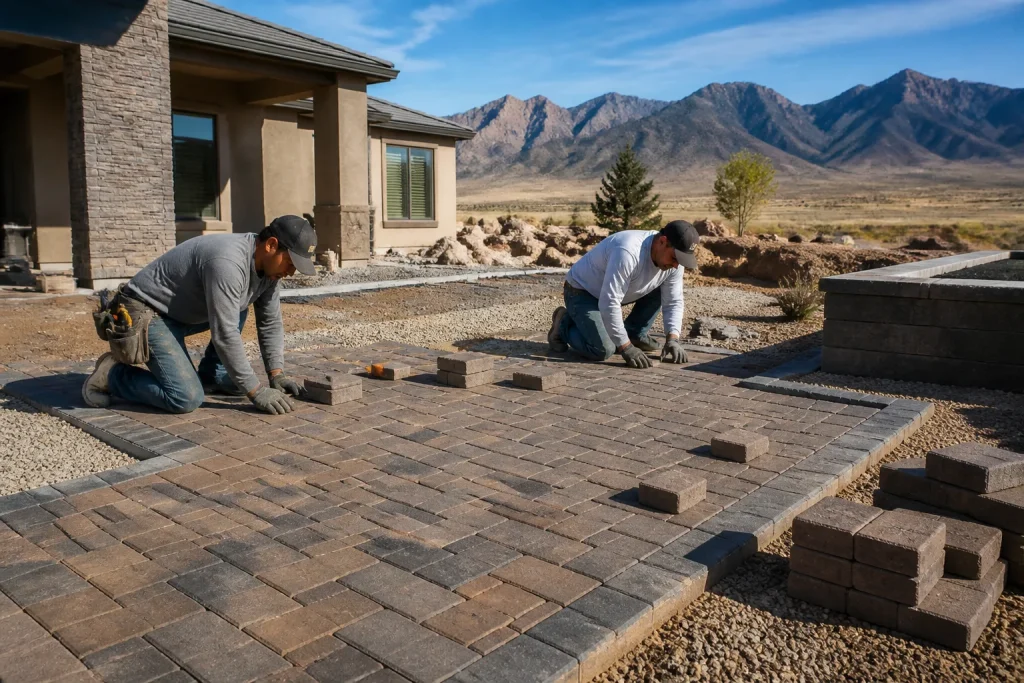
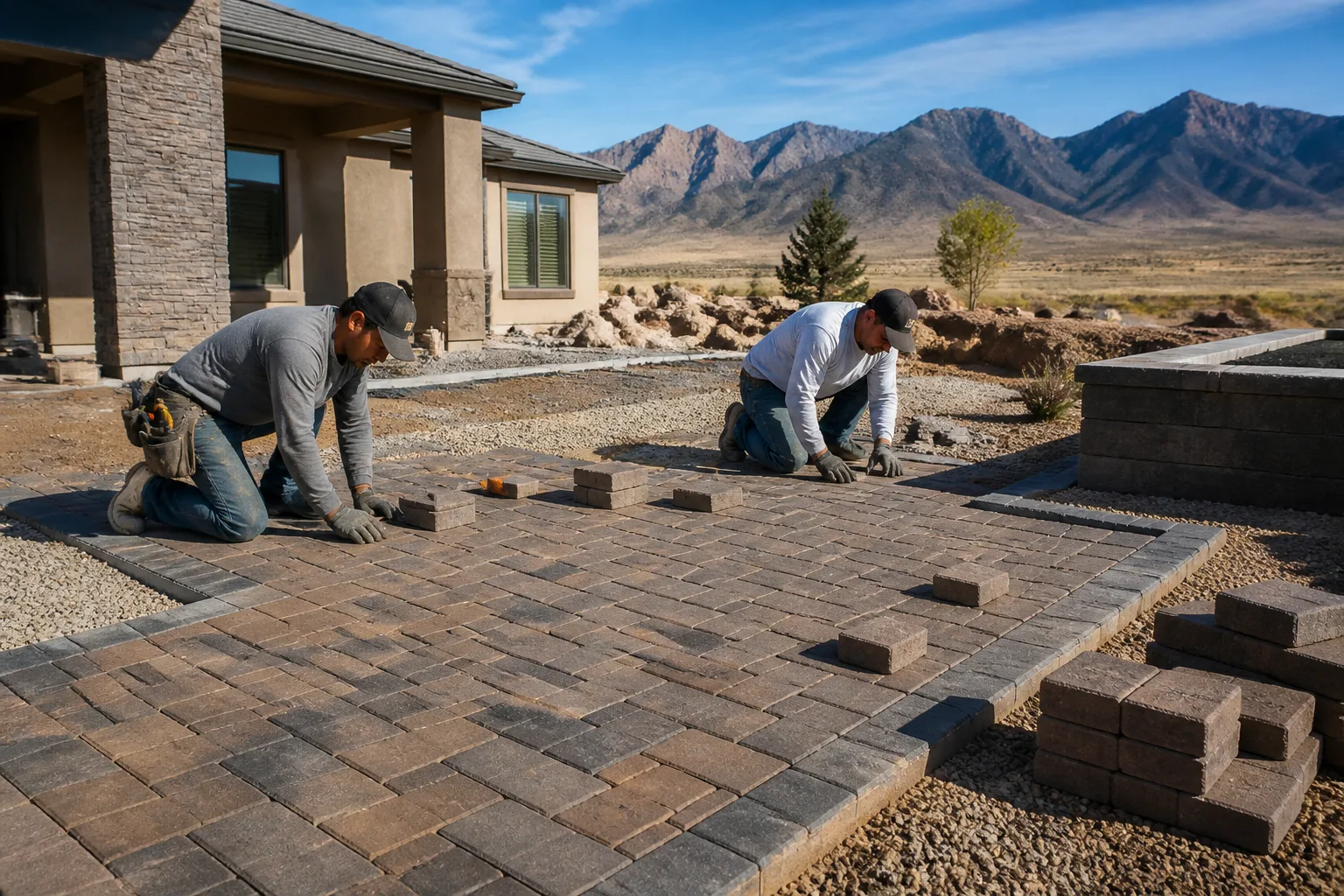
Cambridge Pavers General Contractor in Whitney: A Homeowner’s Guide
Cambridge Pavers has been manufacturing in New York since 1983 and built its name on a distinctive tumbled look. Here’s the catch most Whitney homeowners miss: that look only holds up when the contractor understands Cambridge’s specific edge restraint and jointing requirements. Hire someone who treats it like generic concrete pavers and the surface will rock, cup, and shed its joints within a couple of seasons.
This guide separates Cambridge from the competition and shows you what a Cambridge-specific project actually demands.
Cambridge vs. Techo-Bloc: What’s Actually Different on a Whitney Install?

Cambridge Pavers and Techo-Bloc sit side by side in search results and in contractor quotes, but they’re not interchangeable. The difference isn’t brand loyalty; it’s how each product is built, how it’s laid, and how each one behaves once Whitney’s climate gets to work on it.
Cambridge’s core lineup leans on a tumbled, cleft finish and a denser face mix. The tumbled edges are part of the product’s identity, and that’s exactly where installer skill shows up. Where a crisp, machine-edged block forgives a loose pattern, a tumbled Cambridge unit won’t. The variation between pieces means tight, consistent joint spacing matters more, and the base has to be dead-on or the surface telegraphs every soft spot.
Techo-Bloc brings wider format variety and more aggressive textures, which can be an advantage on certain hardscape designs. But the installation demands shift: some Techo-Bloc lines are more forgiving on tolerance, and some aren’t. The real point is that a contractor who quotes both products the same way is telling you they don’t install enough of either to know the difference.
- Edge restraint: Cambridge units with tumbled edges need a properly keyed edge restraint on every exposed run. Skip it and the field migrates outward under load, and joints open.
- Joint width: Cambridge specifies tight, uniform joints. A crew that eyeballs spacing gets lippage as soon as freeze-thaw and heat cycling kick in.
- Base prep tolerance: Cambridge’s larger-format units amplify base errors. A 1/8-inch dip under a small paver stays a small dip. Under a large tumbled unit, it becomes a visible rocker.
- Finish aesthetic: The tumbled look is the whole reason homeowners pick Cambridge. Protecting that look means protecting the tolerances that hold it flat.
Why Cambridge’s Larger-Format Units Demand Tighter Base Compaction
Whitney’s soil and sun cycle are unforgiving on a poorly compacted base. Cambridge’s larger-format and tumbled-edge units make the problem worse, because a small base error gets multiplied across every square inch of paver on top of it.
Here’s the mechanic in plain terms: a 6×9 concrete block tolerates a soft spot by flexing a little before it fails. A 12×18 Cambridge unit doesn’t flex. It rocks. Rocking opens joints, joints wash out, and now the surface is shifting. We’ve walked drives around Whitney where a contractor who “did pavers for years” compacted the base in two passes and called it done. Two seasons later, every third paver clicks when you step on it.
Proper compaction requires:
- Excavation to spec depth, not “a little deeper than the paver.”
- Base aggregate placed in lifts, typically 2 to 4 inches at a time.
- Plate compactor passes at every lift, not just the final surface.
- Moisture conditioning before compaction. Whitney’s dry heat dries out aggregate fast, and a dry base won’t lock.
- A screeded, verified bedding layer. That layer exists to level the pavers, not hide base flaws.
If a bid never mentions compaction passes, lift depth, or base aggregate spec, that’s your answer. Ask for those details before the first plate compactor hits the ground. This is also where a written price before work starts matters. You can’t argue base methodology after a crew has already buried the evidence under sand.
Whitney’s Sun and Temperature Swings: Why Joints Fail and Which Sand Specs Hold
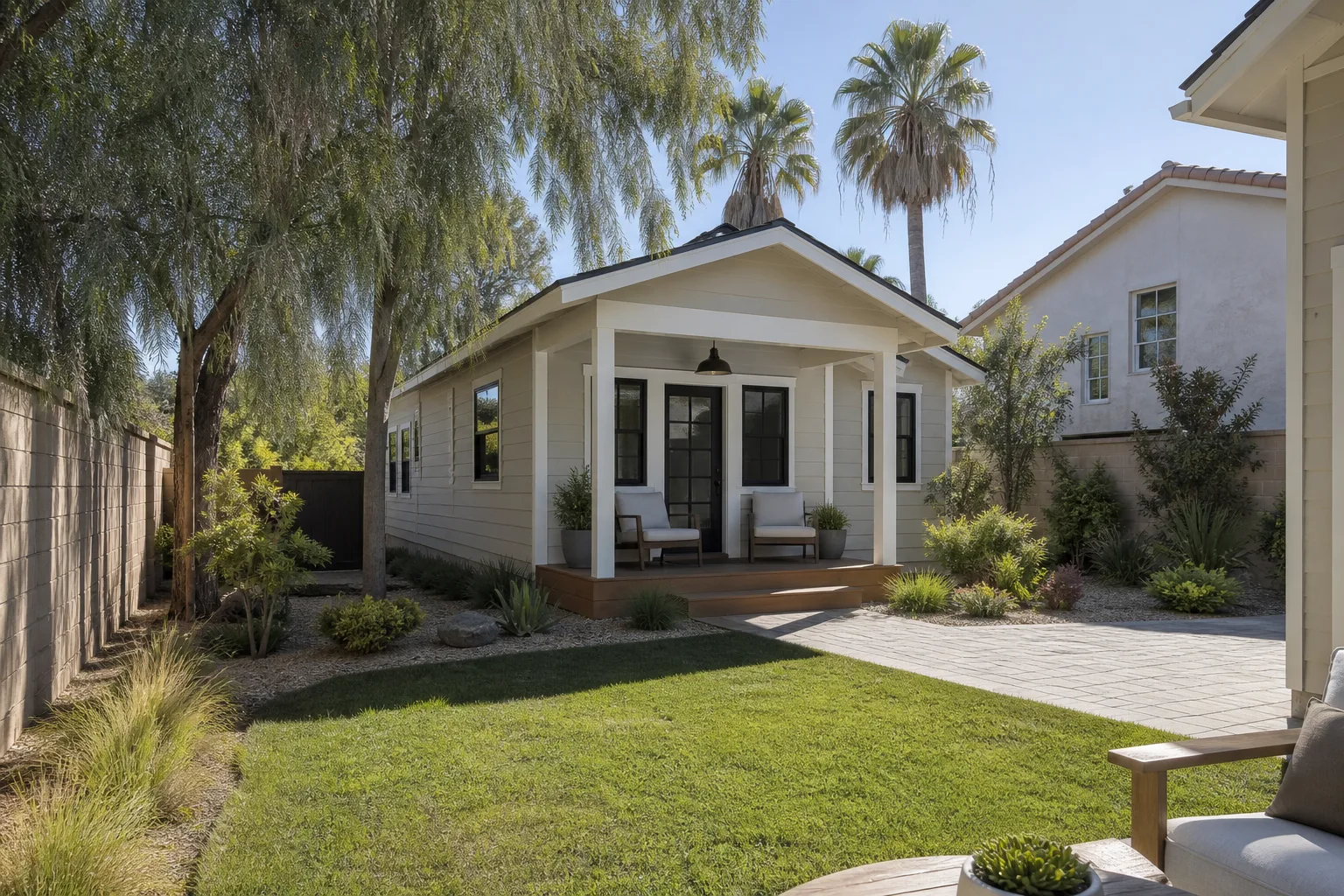
Polymeric sand joint failure is the number-one complaint we hear on resurfaced drives and patios in Whitney. The cause is almost never “the sand was bad.” It’s that the sand spec didn’t match a high-UV, arid, wide-swing climate.
Whitney runs hot days and cool nights for much of the year, and the temperature swing across 24 hours is real. Pavers expand and contract with that swing. If the polymeric sand in the joints doesn’t handle thermal movement, joints shear and start to blow out at the surface.
On top of that, UV exposure breaks down lower-grade sand binders. A polymeric sand that holds up in a humid Northeast backyard isn’t the same sand that holds up on a west-facing Whitney patio taking eight hours of afternoon sun.
Cambridge specifies polymeric sand rated for high-UV exposure and thermal cycling, and the exact product matters more than the label “polymeric.” Look for a sand with:
- UV-stabilized binders, not just “polymeric” on the bag.
- Joint-stabilizer rated for the paver joint width on your design.
- Proper curing requirements posted on the bag, which almost never get met on a rush install.
- Manufacturer compatibility with Cambridge’s joint tolerances.
A Cambridge-trained crew will pre-wet joints correctly, fill to the right height, cure to spec, and not let a truck drive on fresh joints. Ask your contractor which sand they use by name. If they can’t tell you, they don’t know the product.
How to Read a Cambridge Pavers Bid: Line Items That Reveal the Installer
A bid is a fingerprint. Generic concrete paver installers write one kind of bid. Cambridge-specific contractors write another. The difference is in the line items, and it’s worth reading every one before you sign.
Signals of a contractor who knows Cambridge:
- Named material specs: Cambridge product line, color, and format listed, not “concrete pavers.”
- Base prep line item broken out: excavation depth, aggregate type, lift schedule, compaction passes.
- Edge restraint itemized by linear foot: this is the single most-missed line item in a generic bid.
- Polymeric sand itemized with the product name: not “joint sand.”
- Drainage design spelled out: slope percentages on a patio, pitch on a drive, french drain allowances.
- Written price with no change-order clause: or a change-order process with a written trigger, so “surprise” line items are documented in advance.
Red flags that signal generic concrete work wearing a Cambridge label:
- One lump-sum number with no breakdown.
- “We’ll figure out drainage on site.”
- No mention of compaction, edge restraint, or which polymeric sand.
- Anyone who quotes Cambridge and Techo-Bloc at the exact same price with the exact same scope.
This is where upfront pricing earns its keep. A written price landed before the first tool is picked up is worth more than a courtesy handshake, especially when the product on the ground is a Cambridge tumbled unit that doesn’t tolerate shortcuts.
The Photo-Documentation Standard Every Cambridge Project Should Have
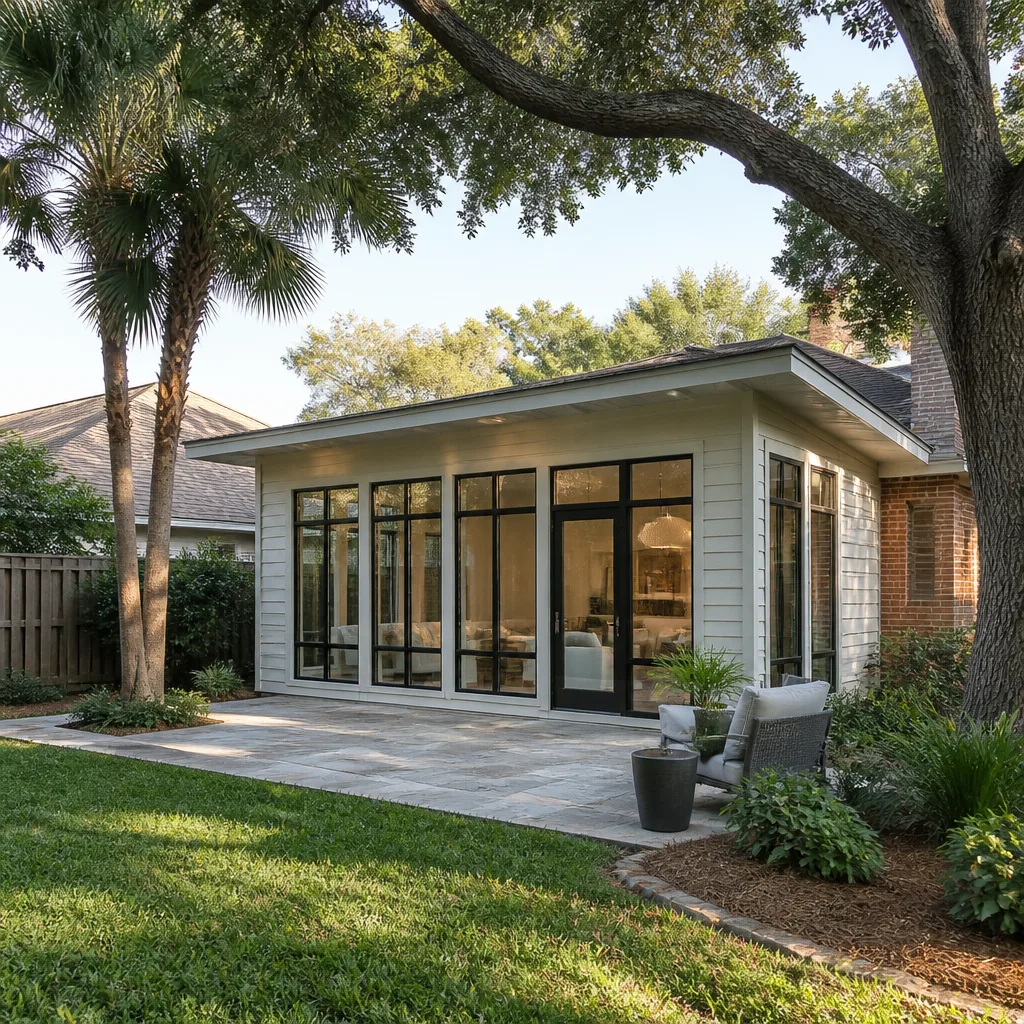
Once base and sand are buried under finished pavers, you can’t inspect what you can’t see. Photo documentation is the only permanent record of the work that’s holding your surface up. Ask for it before work begins, and specify the three moments you want captured.
- Base layer: after excavation, aggregate placement, and compaction. Ask for a photo of the compacted base before bedding sand goes down. This is the closest you’ll get to evidence of compaction.
- Bedding and jointing: after the paver field is set, edge restraint is installed, and polymeric sand is placed but before final cure. This is where pattern gaps and edge details get caught.
- Completed surface, clean and empty: before furniture, planters, or vehicles touch the new surface. Once a vehicle parks, that photo opportunity is gone.
We take those three photo sets on every hardscape job and drop them into a shared update you can see from your phone. It’s not a courtesy; it’s the same photo-update standard we’ve applied across our remodel work for years. And it’s the difference between “trust us” and “here’s what we built underneath.”
When to Call a Pro (And When to Leave It Alone)
Asphalt-level base work, plate compaction on aggregate lifts, and anything involving Cambridge edge restraint are not weekend-project territory. Moving and compacting a few tons of base aggregate by hand will beat you faster than the pavers will, and a half-compacted base will fail inside two seasons at a fraction of what a professional install would have cost.
Call a pro when you’re dealing with:
- A surface area over roughly 500 square feet (driveways, patios, large walkways).
- Existing drainage problems or slope questions.
- Any Cambridge tumbled unit spec, since the tolerances need pro handling.
- Polymeric sand joint work on an existing patio or drive where joints have already failed once.
Related services in Whitney: if your Cambridge project sits alongside a broader exterior or interior schedule, take a look at Sawyer Remodeling Whitney home for how we run projects, or go straight to General Contractor in Whitney for the full project scope. If the Cambridge work is part of a bigger remodel with a kitchen or bath on the same punch list, we handle those under Kitchen Remodeling in Whitney and Bathroom Remodeling in Whitney, with kitchen surfaces sourced from Cambria and Silestone when the design calls for it.
The Bottom Line
Cambridge Pavers is a different product with a different install playbook, and treating it like generic concrete work is the fastest way to lose what you paid for. The install depends on three non-negotiables in Whitney: base compaction done in lifts, edge restraint and joint tolerances held to Cambridge spec, and a polymeric sand rated for our UV load and temperature swings. The rest is pick the contractor who can prove they know the difference.
If you’re in Whitney and want help, Sawyer Remodeling Whitney offers free estimates. Call (833) 570-8789. Every estimate comes with a written price before any work starts, live arrival time so you know when the crew is on the way, and photo updates before and after, all covered by the 365-Day Done Right Promise. Our technicians have up to 21 years of experience with the products that live under Whitney’s sun.
Frequently Asked Questions
Neither is better across the board. Cambridge brings a tumbled, classic aesthetic with tighter joint tolerances and strict base requirements, which is great for homeowners who want that specific look and can hire for it. Techo-Bloc offers wider format variety and more aggressive textures. Your choice should hinge on the look you want and the technical spec the contractor can actually execute.
Because the polymeric sand wasn’t rated for high UV and thermal cycling. Whitney’s sun and 24-hour temperature swings move the pavers, and lower-grade sand binders crack under that load. Cambridge specifies UV-stabilized polymeric sand with joint-stabilizer rated for the paver width. Ask what sand is going in before the install begins.
Very tight, especially under larger-format and tumbled-edge units. Base aggregate goes down in lifts (typically 2 to 4 inches at a time), gets moisture-conditioned, and gets compacted at every lift, not just at the surface. Skip any of that and the surface rocks. Call (833) 570-8789 for a free estimate that spells out the base methodology in writing.
Three sets: the compacted base before bedding sand, the set field with edge restraint and sand placement, and the clean completed surface before any furniture or vehicles touch it. Ask for that photo standard up front. We build it into every hardscape job as part of the same update process we run on our remodeling work.
Written by the team at Sawyer Remodeling Whitney.
Need Construction Help?
Call Sawyer Remodeling Whitney - licensed & insured, here with fast after-hours help in Whitney.
(833) 570-8789