
Techo-Bloc General Contractor in Whitney: A Homeowner’s Guide
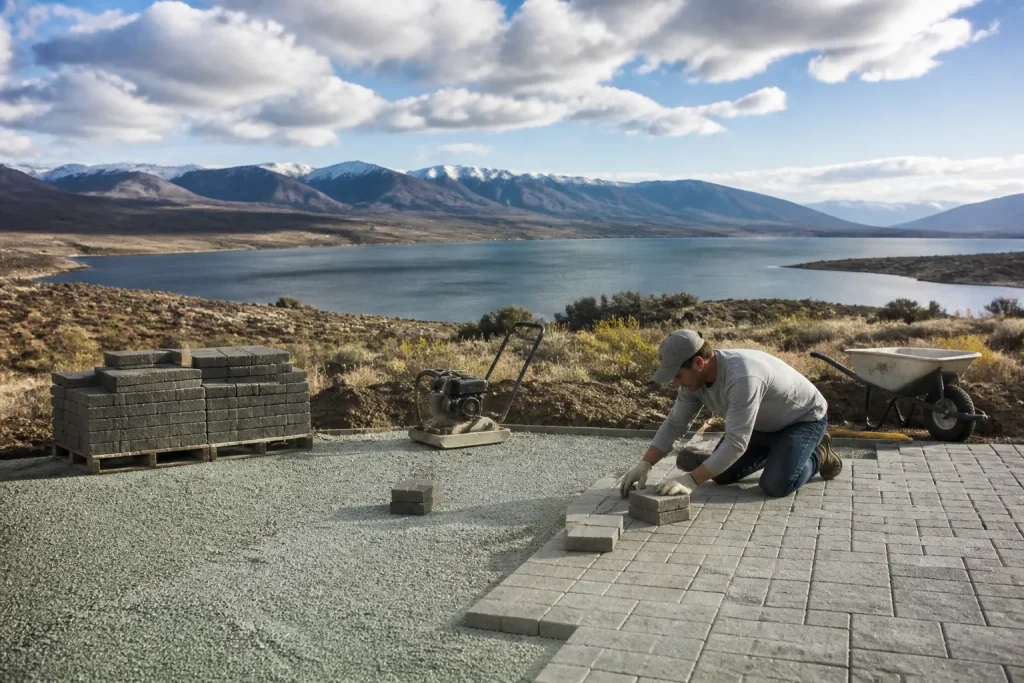
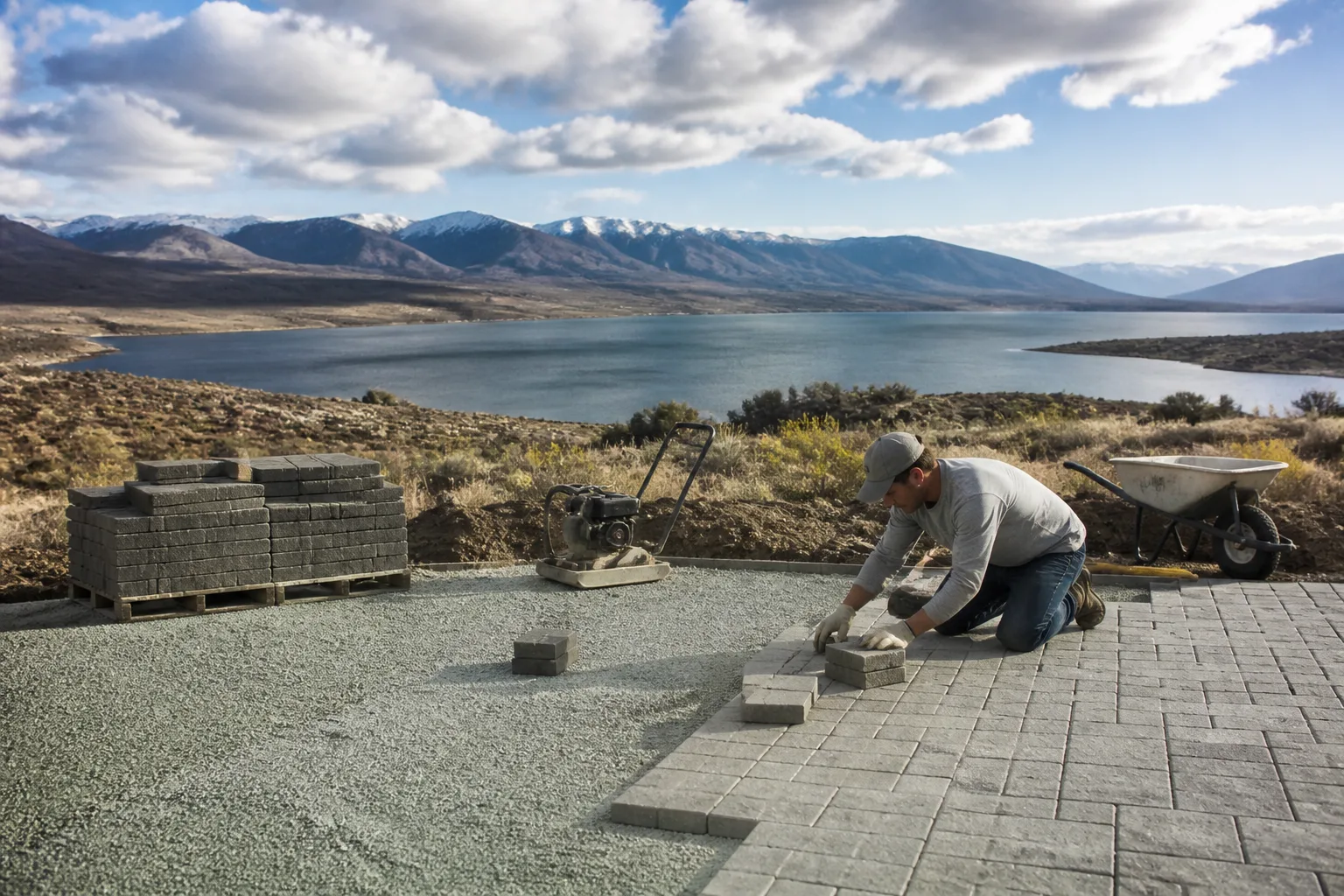
Techo-Bloc’s own installation manual runs over 40 pages. Most homeowners never see it, and neither do some of the contractors bidding their job. In Whitney, where caliche clay sits under half the yards and the desert swings from 100°F summers to hard overnight freezes, the material on top is the easy part. What goes under it decides whether your patio still looks new in five years or heaves and shifts after a single winter.
Here’s the short answer up front: a Techo-Bloc project in Whitney is only as good as the base prep and the installer’s documentation, and your job as a homeowner is to vet both before you sign. If you’d rather have someone walk you through it, call (833) 570-8789 for a free estimate.
Key Takeaways
- Techo-Bloc pavers are excellent products. The failures we see in Whitney come from base depth, compaction, and edge restraint, not the block itself.
- Whitney’s caliche soil and freeze-thaw cycles often push base depth past the generic manufacturer minimums written for milder climates.
- “Authorized Techo-Bloc installer” is a specific credential, not a marketing word. Ask what it certifies and get it in writing.
- A real bid names the base material, compaction spec, edge restraint brand, and joint sand type. A verbal price with no line items is a red flag.
- During-install photos, not just after shots, are your evidence if settling shows up inside the warranty window.
Why does base prep matter more than the pavers in Whitney?
In Whitney, the ground under your patio is the whole story. Much of the area sits on caliche, a calcium-cemented layer that can behave like concrete in dry months and turn unstable when water pools against it. Add the high-desert freeze-thaw cycle, where overnight temps drop below freezing and thaw by mid-morning, and you get soil that expands and contracts through the year. A paver sitting on a shallow, poorly compacted base will rock, settle, and open joints long before the block wears out.
Manufacturer base-depth charts are written to work across a huge range of climates. They assume reasonably drained, stable subgrade. Whitney doesn’t always cooperate. We’ve seen bids here that specified a 4-inch base on ground that needed closer to 6 to 8 inches of compacted aggregate once the caliche was broken up and re-graded. The difference in material cost is modest. The difference in how the patio performs over five winters is not.
What to ask your contractor about base in Whitney:
- How deep is the excavated base, and what’s the subgrade like once you get down to it?
- What aggregate are you using, and how are you compacting it (plate compactor passes, lift thickness)?
- How will you handle drainage so water doesn’t sit against the caliche?
What does “Techo-Bloc Authorized” actually certify?
Plenty of contractors “do pavers.” Far fewer carry Techo-Bloc authorization, which is a manufacturer program tied to training and installation standards rather than a sticker you buy. When a contractor is authorized, it generally means they’ve completed the manufacturer’s training on proper base prep, compaction, edge restraint, and joint sand for that specific product line, and they’re accountable to the manufacturer’s standards, not just their own habits. That matters in Whitney, because the manufacturer’s spec is the benchmark a warranty claim gets measured against.
The practical difference between a general contractor who installs pavers and an authorized Techo-Bloc installer usually shows up in three places:
- Spec literacy. An authorized installer knows the manual page for your product and can tell you the base, bedding, and joint requirements without guessing.
- Edge restraint and joint sand. These are the details that stop pavers from spreading. Authorization means the installer is trained on the correct system, not whatever was on the shelf.
- Accountability. If something fails, you have a manufacturer standard to point to, not just a handshake.
Ask any bidder directly: are you Techo-Bloc authorized, and can you show me the spec you’ll build to? A confident contractor answers in a sentence. A vague one changes the subject.
What should a written Techo-Bloc scope include before work starts?
A written scope is where a good Whitney install separates itself from a bad one. The number on the bid matters, but the line items under it are what protect you. Before anyone picks up a tool, your scope should spell out the technical details in plain language. If a contractor can’t or won’t put these in writing, that tells you something.
- Base material type and depth – the specific aggregate (for example, crushed stone base) and the compacted depth in inches, not “proper base.”
- Compaction spec – how it’s compacted, in what lift thickness, and to what density.
- Edge restraint brand – the actual product holding the perimeter, since this is what keeps the field from spreading.
- Joint sand type – polymeric or the manufacturer-specified sand, named, because the wrong sand washes out or locks unevenly.
- Drainage plan – slope and where water goes, especially against Whitney’s caliche.
- Excavation and haul-off – how much soil comes out and where it goes.
This is the same discipline we apply on every job under The Relay Visibility Guarantee: a written price before work starts, so the number on the invoice is the number you approved. A paver scope should work exactly the same way.
What are the red flags in a Techo-Bloc bid?
The bid is where most Whitney homeowners get burned, and it’s almost always the same handful of warning signs. None of them require you to be a mason to spot. You just have to read carefully and ask one follow-up question.
- Vague line items. “Paver installation – lump sum” with no base depth or material named is a bid that can grow once the ground is open.
- No base depth mentioned at all. If the base isn’t specified, it wasn’t planned. That’s the exact failure point in Whitney’s soil.
- A verbal quote with no itemized breakdown. If it isn’t written and itemized, it isn’t a price. It’s a guess you’ll be held to later.
- No mention of edge restraint or joint sand. These are the parts that keep the patio together through freeze-thaw.
- Pressure to skip permits or inspection. Paving and hardscape work often touches grading and drainage, and skipping the paperwork pushes the risk onto you.
One bid we looked at over in the far north end of the valley priced the pavers beautifully and never once mentioned what was going underneath. When we asked, the answer was “standard base.” In Whitney, “standard” is exactly the word that costs you a re-level in year three.
How does photo documentation protect you during installation?

Photos taken during the install, not just a pretty after shot, are your insurance policy. If settling or shifting shows up inside the warranty period, the question becomes whether the base was built correctly. During-install photos answer that question before it’s asked: excavation depth, base layers, compaction, edge restraint placement, and joint sand all captured at the moment they happened. Without them, a warranty conversation turns into a he-said-she-said about what’s under the pavers.
On any Whitney project, ask for photo updates at each phase. This is standard for us: before-and-after photo updates are part of how every job runs, so you’re not guessing what happened under the surface. If a contractor doesn’t document the layers you can’t see, that’s the single best reason to keep looking.
If the project touches walls, siding, or a structure alongside the hardscape, our general contractor services in Whitney cover that scope. If it’s indoors instead, see our kitchen remodeling in Whitney and bathroom remodeling in Whitney pages, or start at the Sawyer Remodeling Whitney home page.
When to call a pro (and when a paver project is more than pavers)
Some hardscape work is genuinely a pro job, and a Techo-Bloc patio in Whitney is one of them. Excavating caliche, grading for drainage, and compacting to spec are physical, equipment-heavy, and unforgiving of shortcuts. This also touches the safety side: digging near buried utilities, and any cutting of block or stone, calls for proper tools, protective gear, and a trained hand. We don’t recommend homeowners tackle the base and bedding themselves; the labor you save is small next to the cost of a failed patio.
Most of what you can do yourself is the vetting: read the bid, ask for the spec, request photos at each phase. If the answer is ever “don’t worry about it,” worry.
Related services in Whitney: hardscape work often pairs with general contracting in Whitney when walls, drainage, or structures are involved.
The Bottom Line
Techo-Bloc makes a strong product, but in Whitney the base under the pavers is what earns your money back. Vet the installer the same way you’d vet the materials: confirm Techo-Bloc authorization, demand a written itemized scope that names base depth, edge restraint, and joint sand, and ask for during-install photos. Those three things separate a patio that lasts from one that settles after the first hard winter. If you’re in Whitney and need help, Sawyer Remodeling Whitney offers free estimates. Call (833) 570-8789 to schedule yours, and we’ll put the price range and the scope in writing before any work starts. Our technicians have up to 21 years of experience, and every project carries the 365-Day Done Right Promise.
Frequently Asked Questions
Most residential Techo-Bloc patios in Whitney land in a broad range depending on square footage, block style, and how much caliche has to be broken out and hauled away. The base prep drives much of the cost, so two bids on the “same” patio can differ by thousands. Call (833) 570-8789 for a written, itemized price on your specific yard.
Usually, yes, because authorization means the installer is trained to the manufacturer’s spec for base, compaction, edge restraint, and joint sand, and is accountable to that standard. In Whitney’s soil, that spec is the difference between a stable patio and one that shifts. Ask any bidder to confirm authorization and show the spec in writing.
Because Whitney’s caliche and freeze-thaw cycles stress the subgrade more than the mild climates the generic minimums were written for. A patio built to the bare minimum in Whitney can heave or settle within a few winters. Call (833) 570-8789 and we’ll tell you what base depth your project likely needs.
Base material type and compacted depth, the compaction method, the edge restraint brand, the joint sand type, and the drainage plan. If a bid omits those, it’s incomplete. Call (833) 570-8789 for a free estimate with a full itemized scope.
Written by the team at Sawyer Remodeling Whitney.
Need Construction Help?
Call Sawyer Remodeling Whitney - licensed & insured, here with fast after-hours help in Whitney.
(833) 570-8789