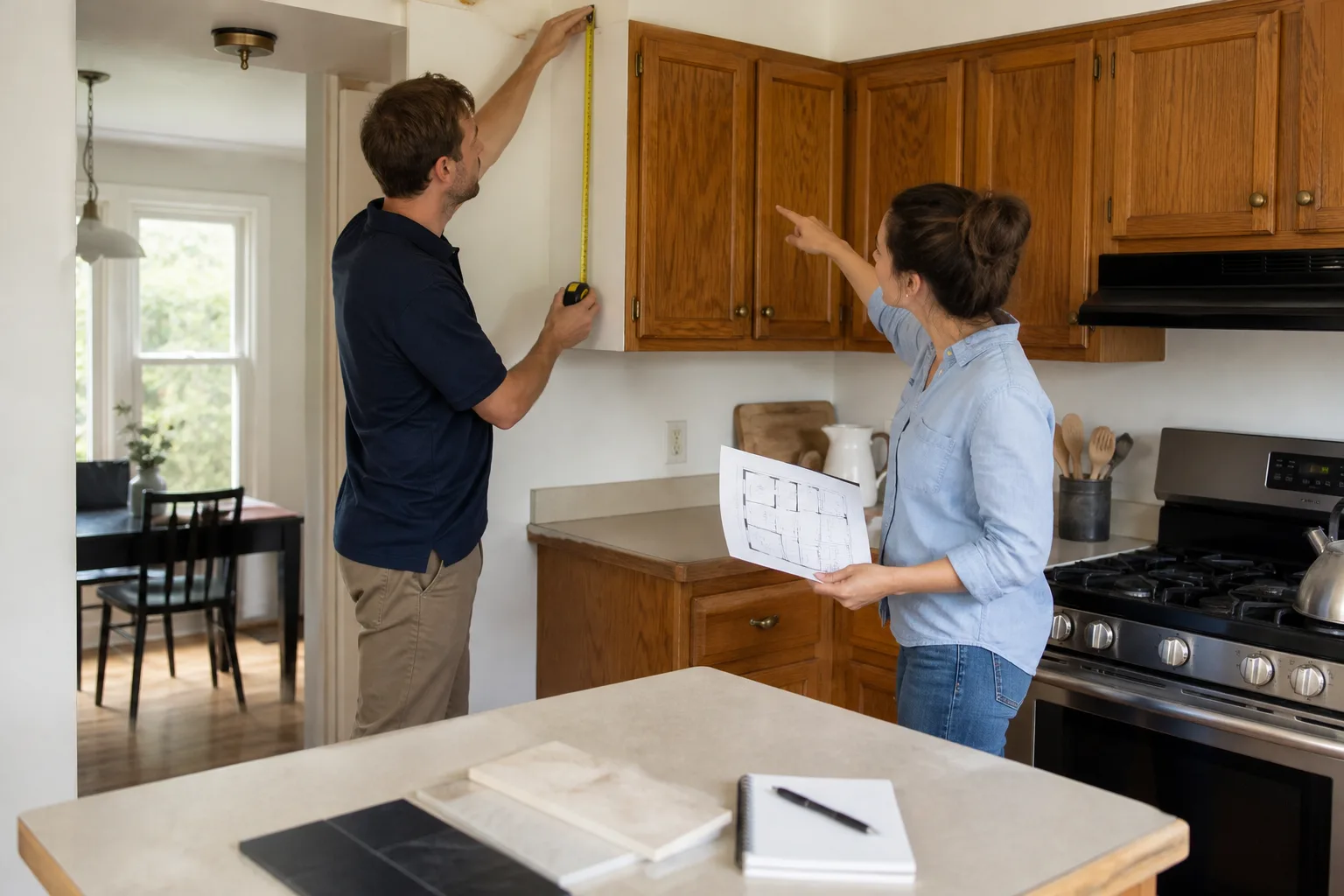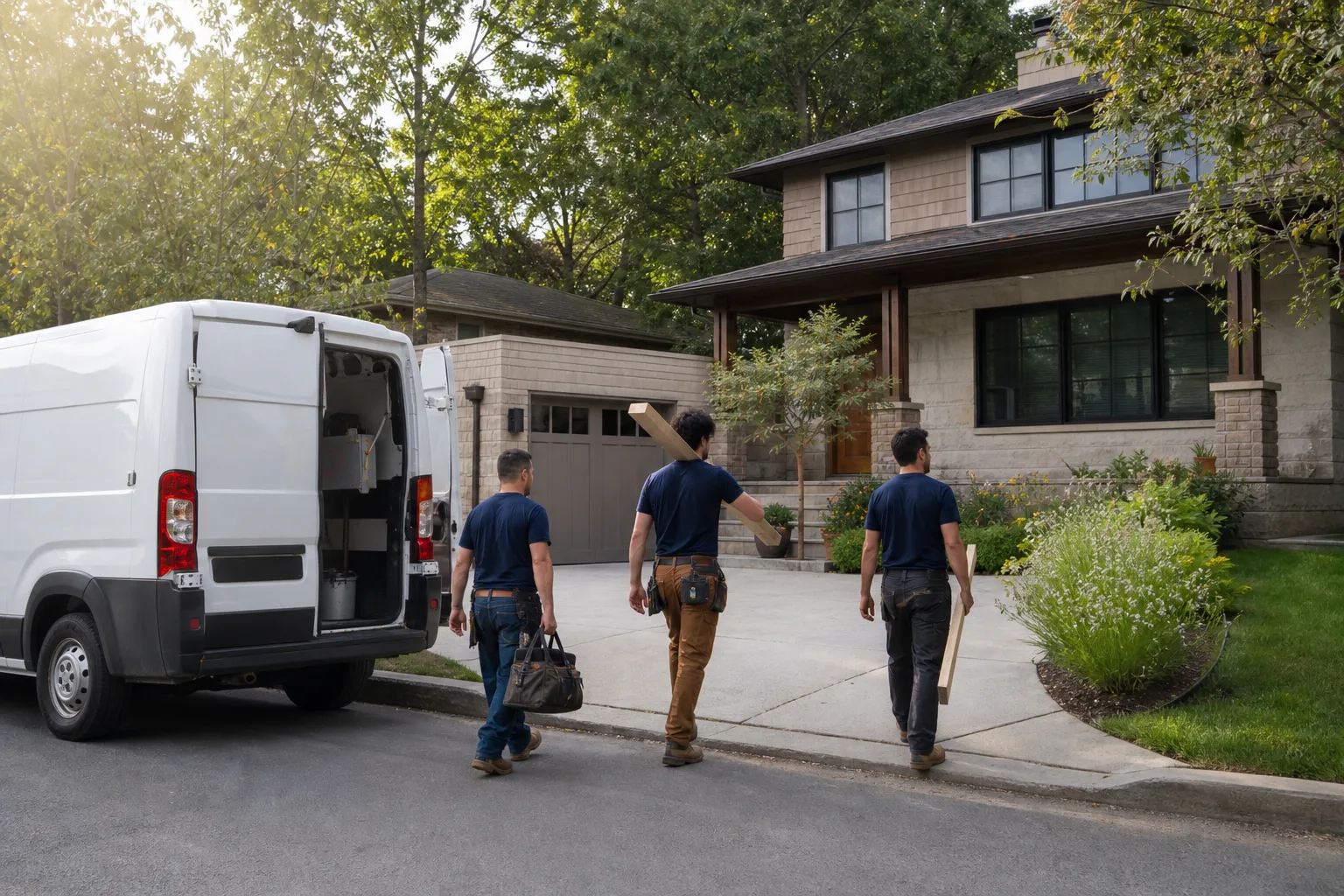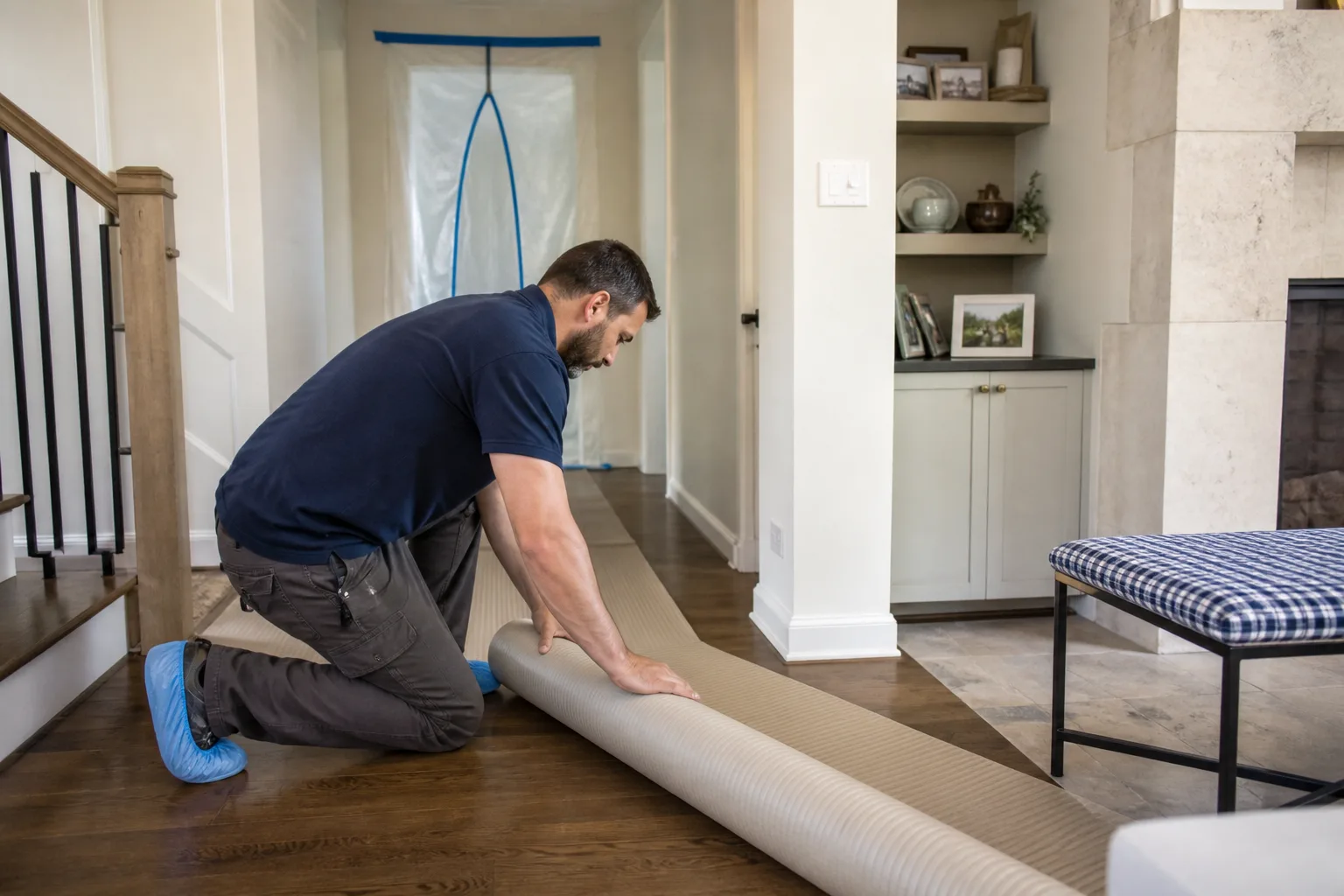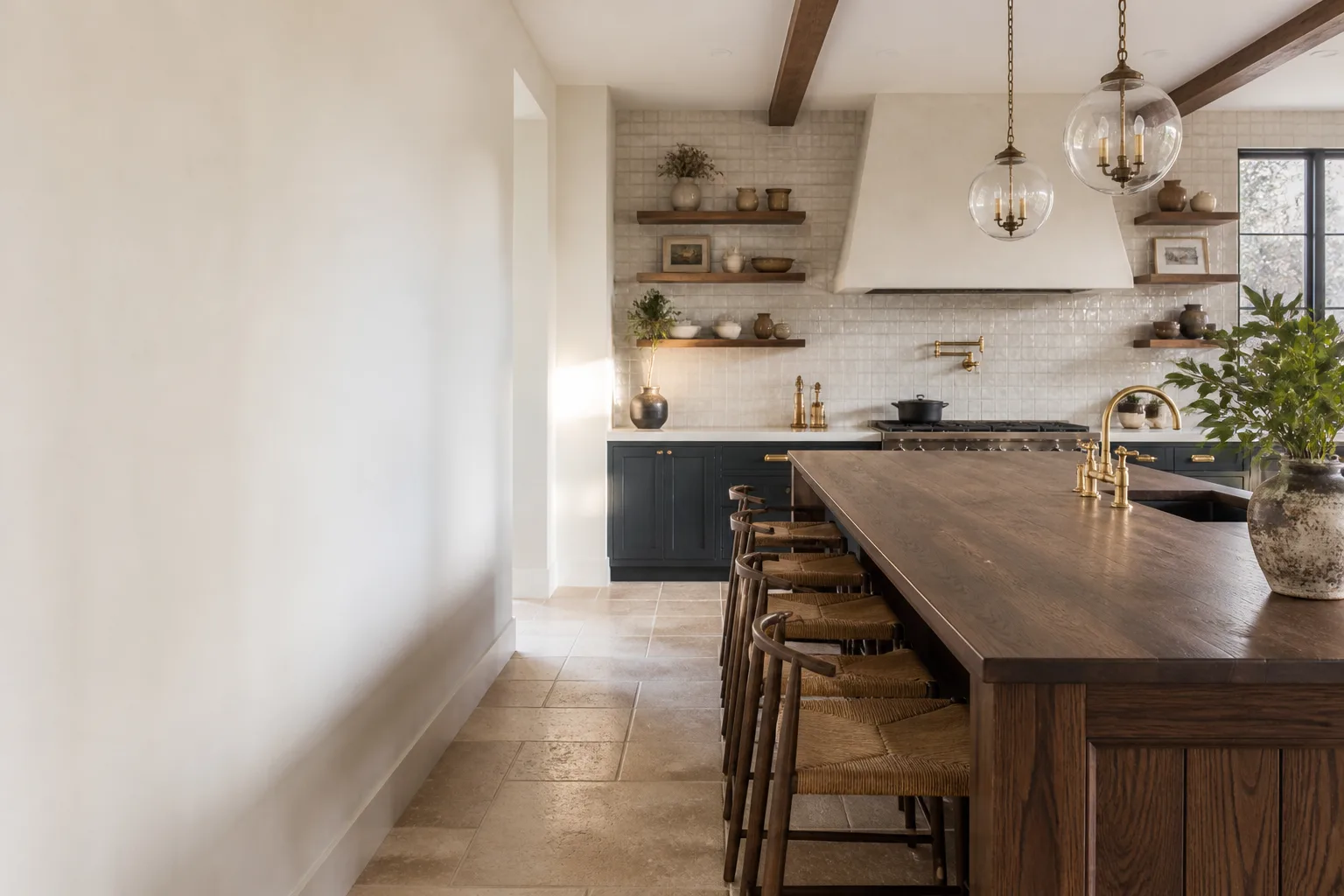

Free written scope consultation - allowances, timeline, and change-order rules on paper before a single trade is scheduled
Styles & brands we work with
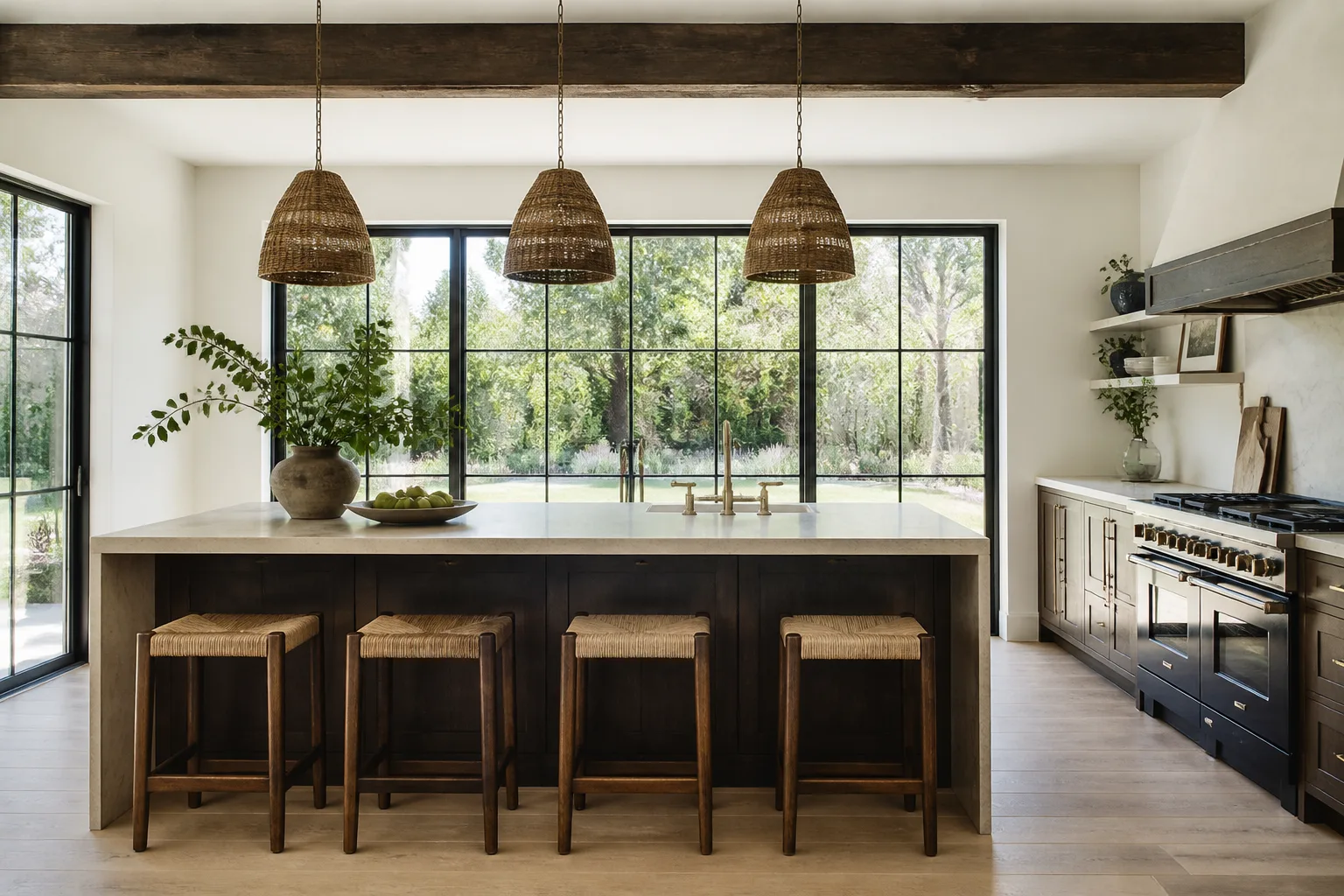
- Kitchen remodeling
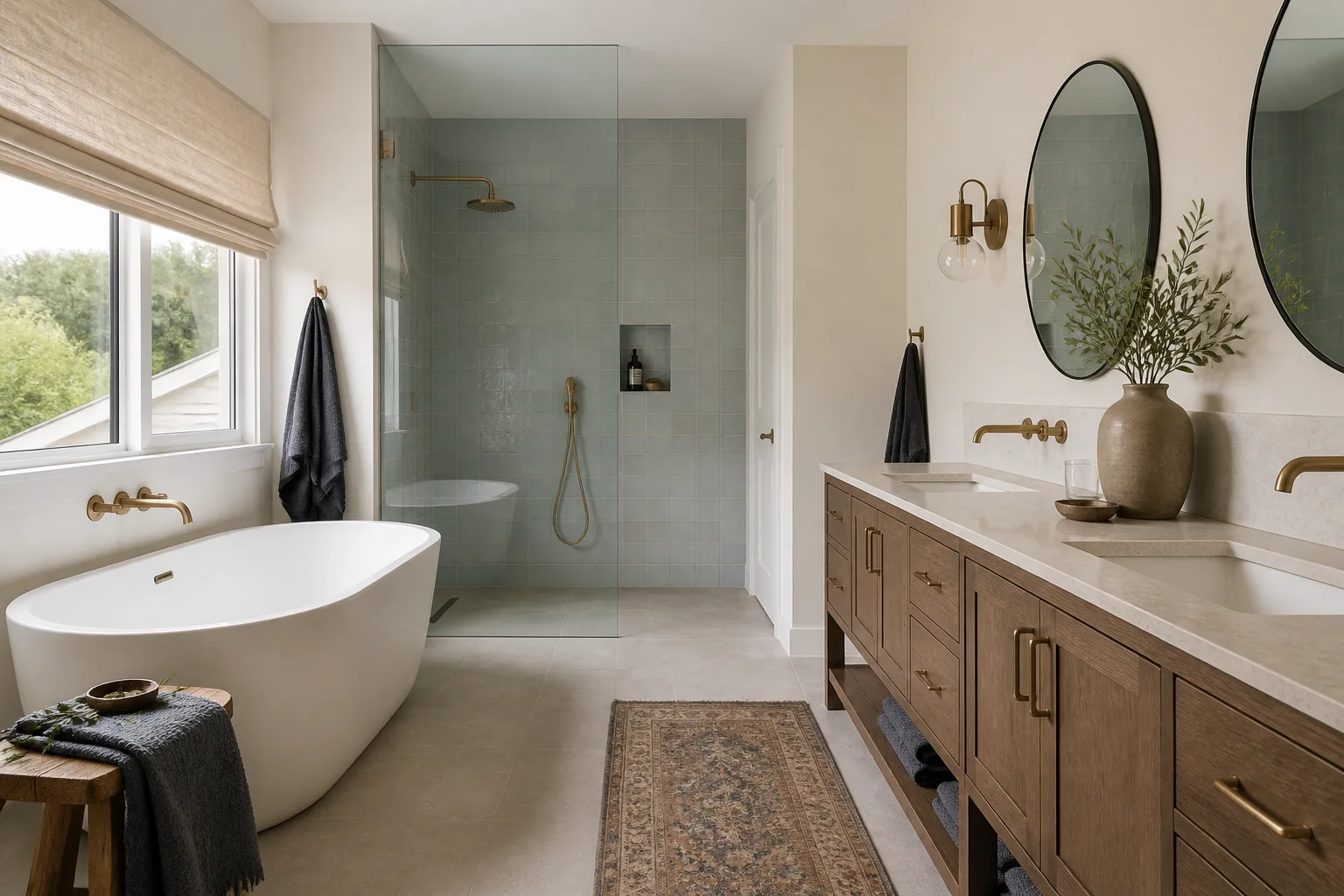
- Bathroom remodeling
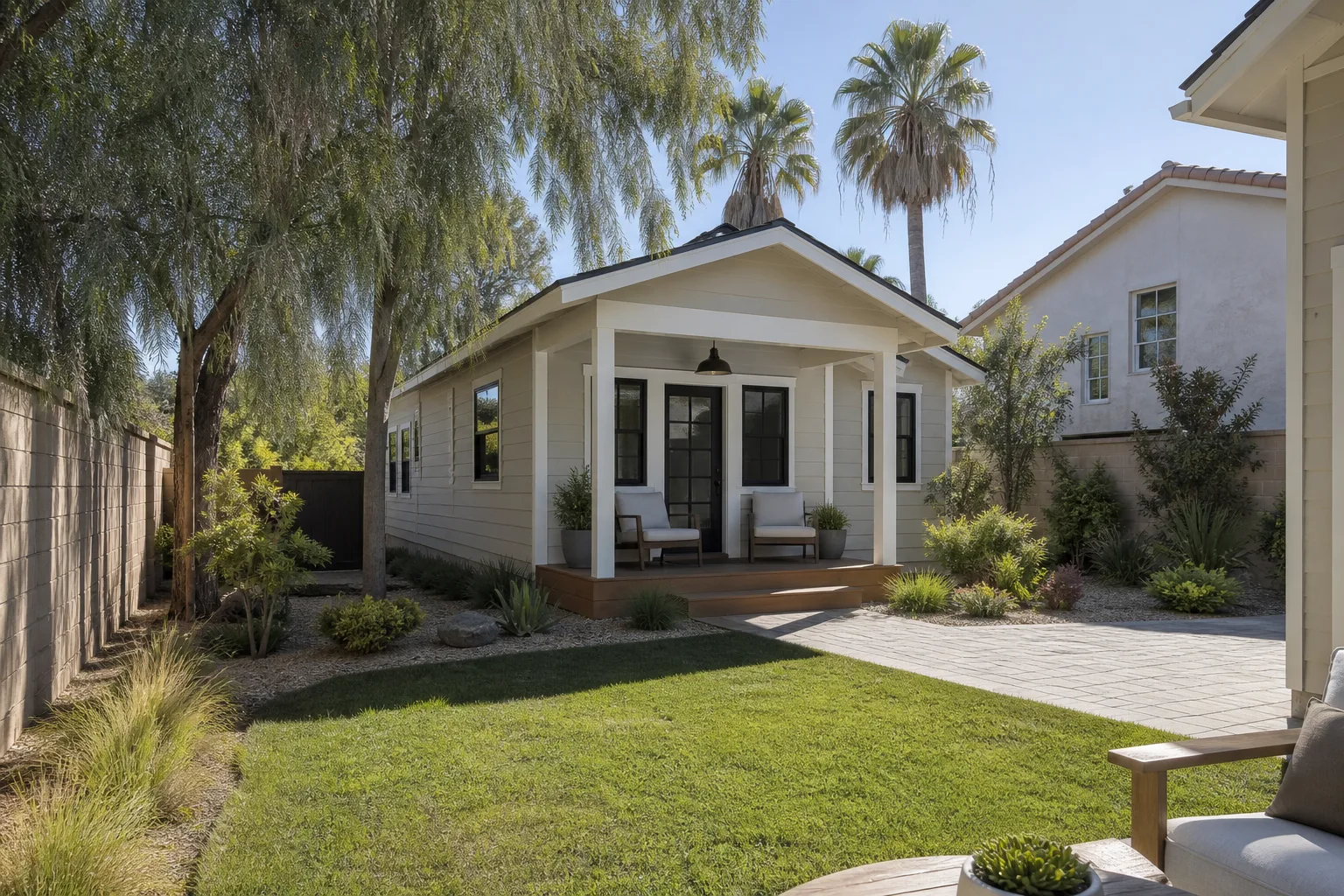
- Home additions & ADU
- Roofing
- Windows & doors
- Driveway & pavers
- Fence
See the difference
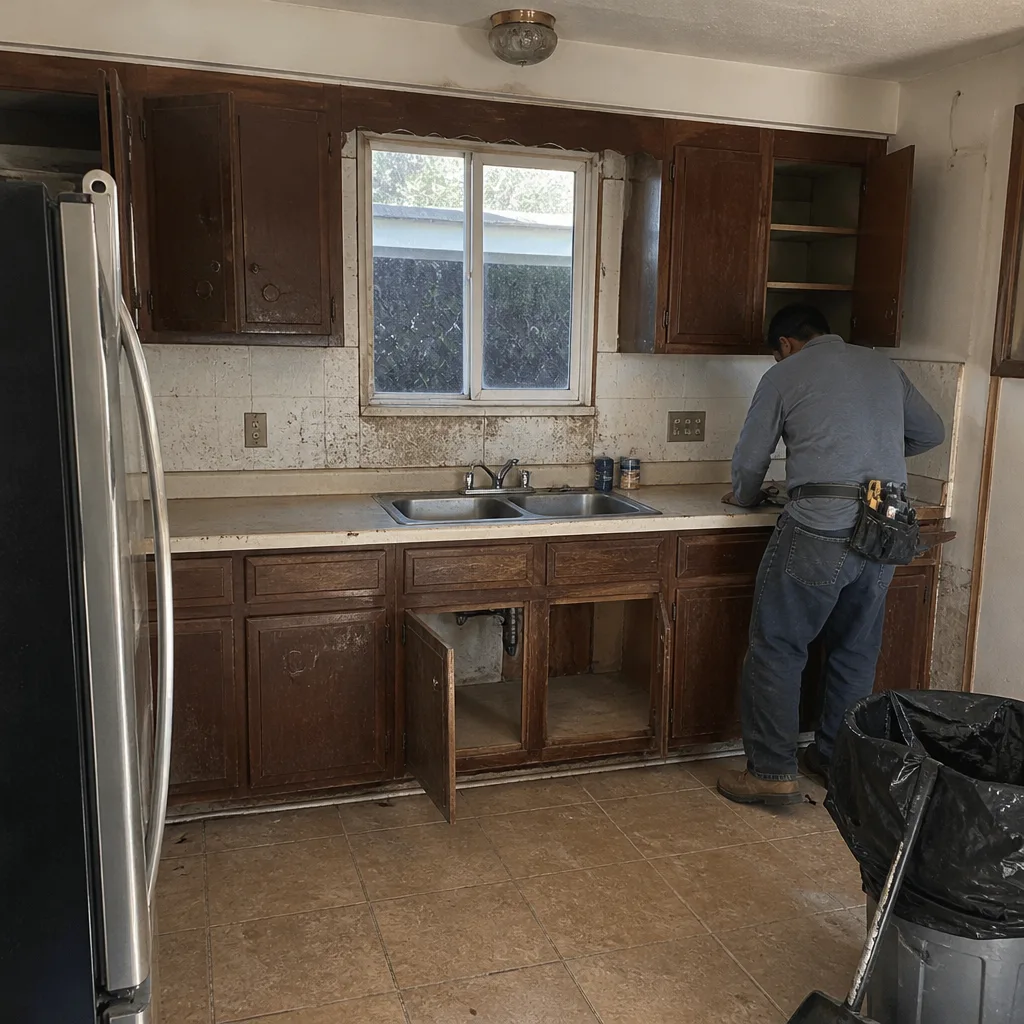 Before
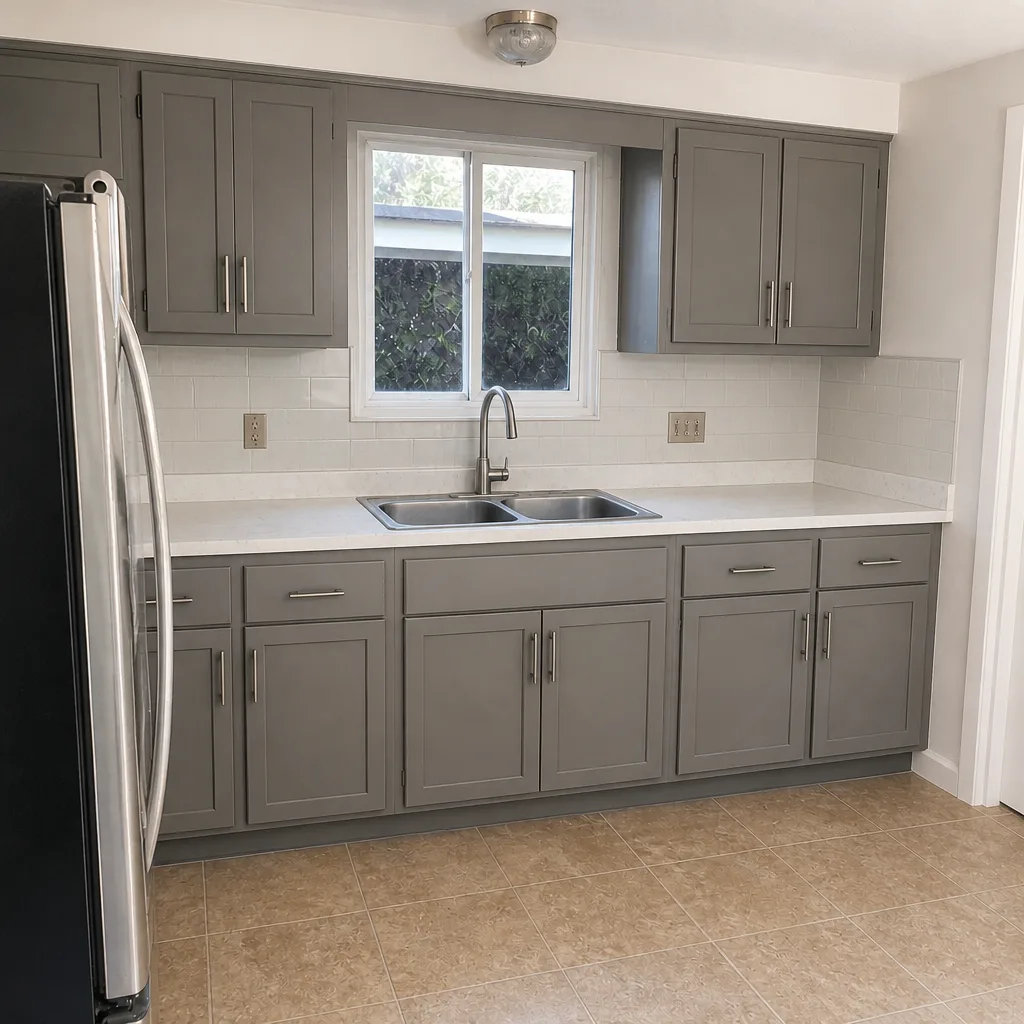 After
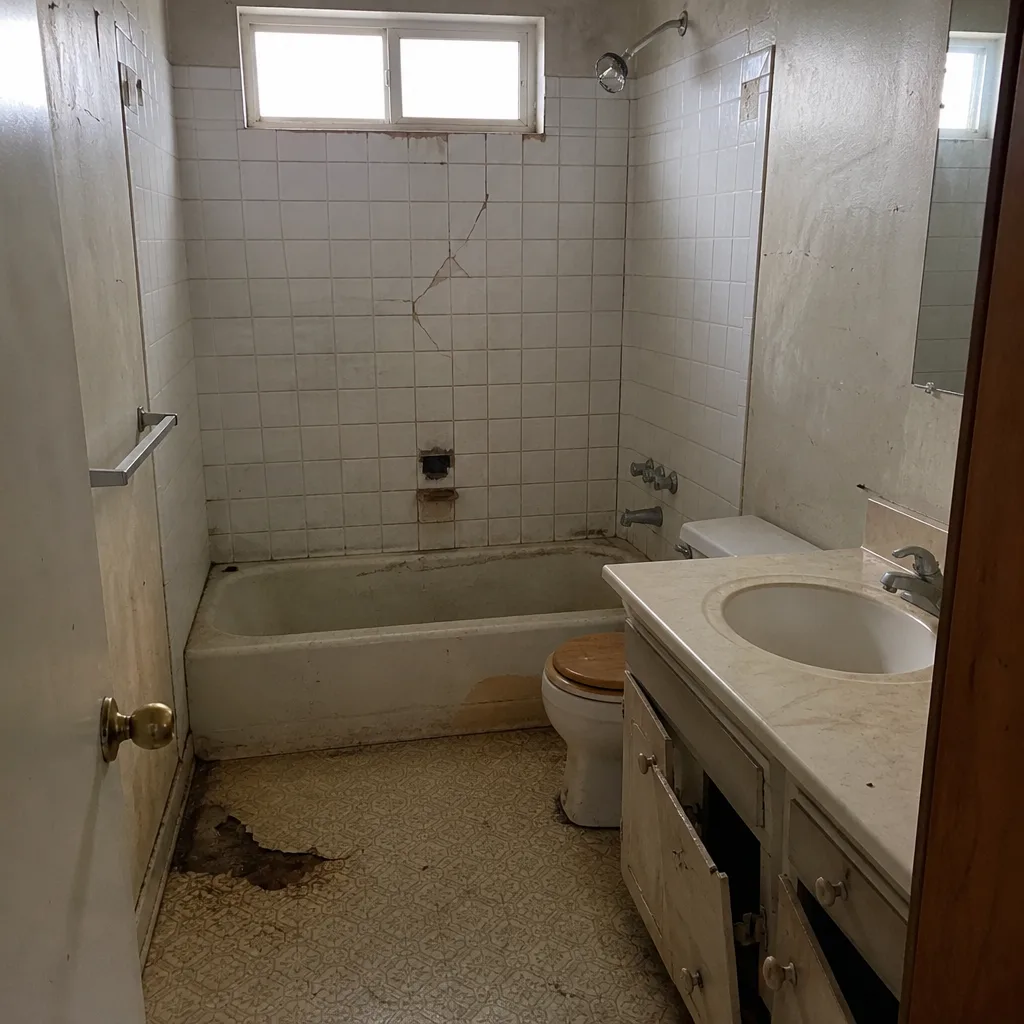 Before
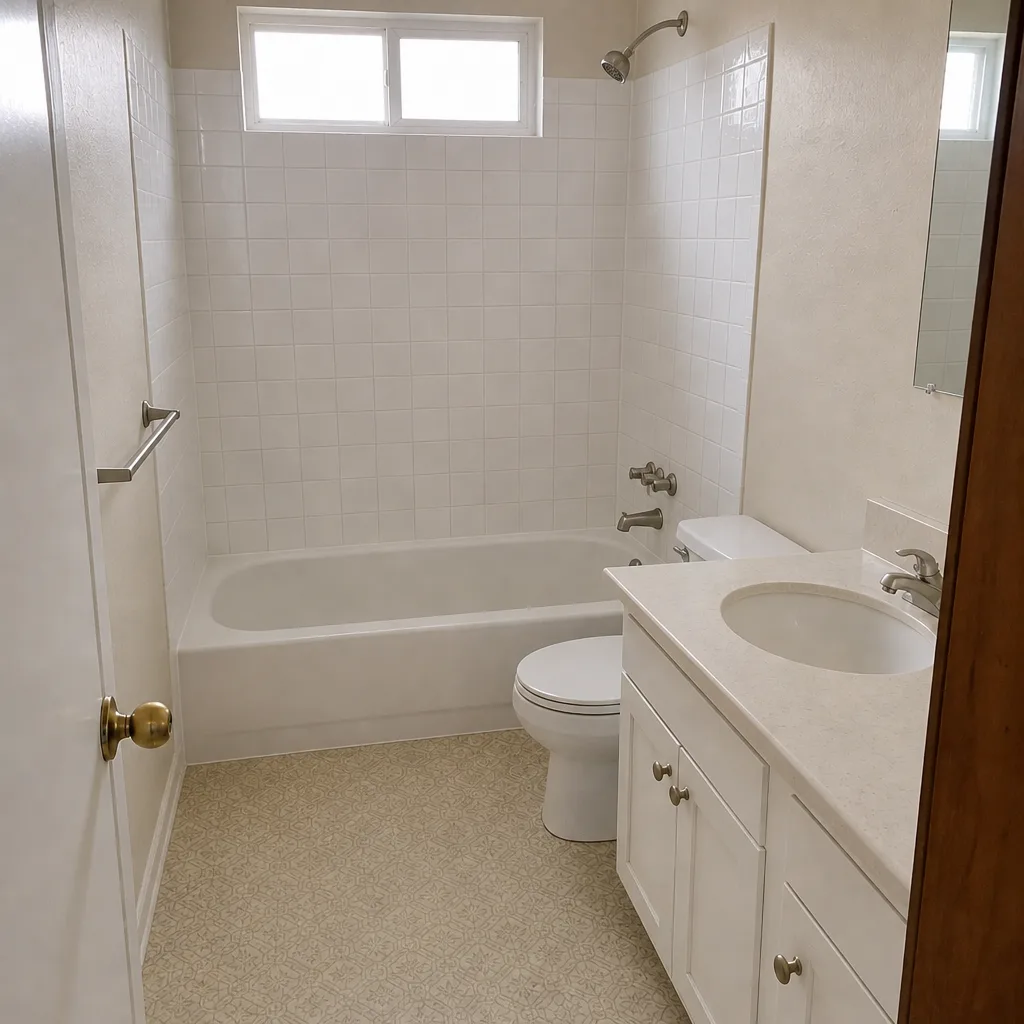 After
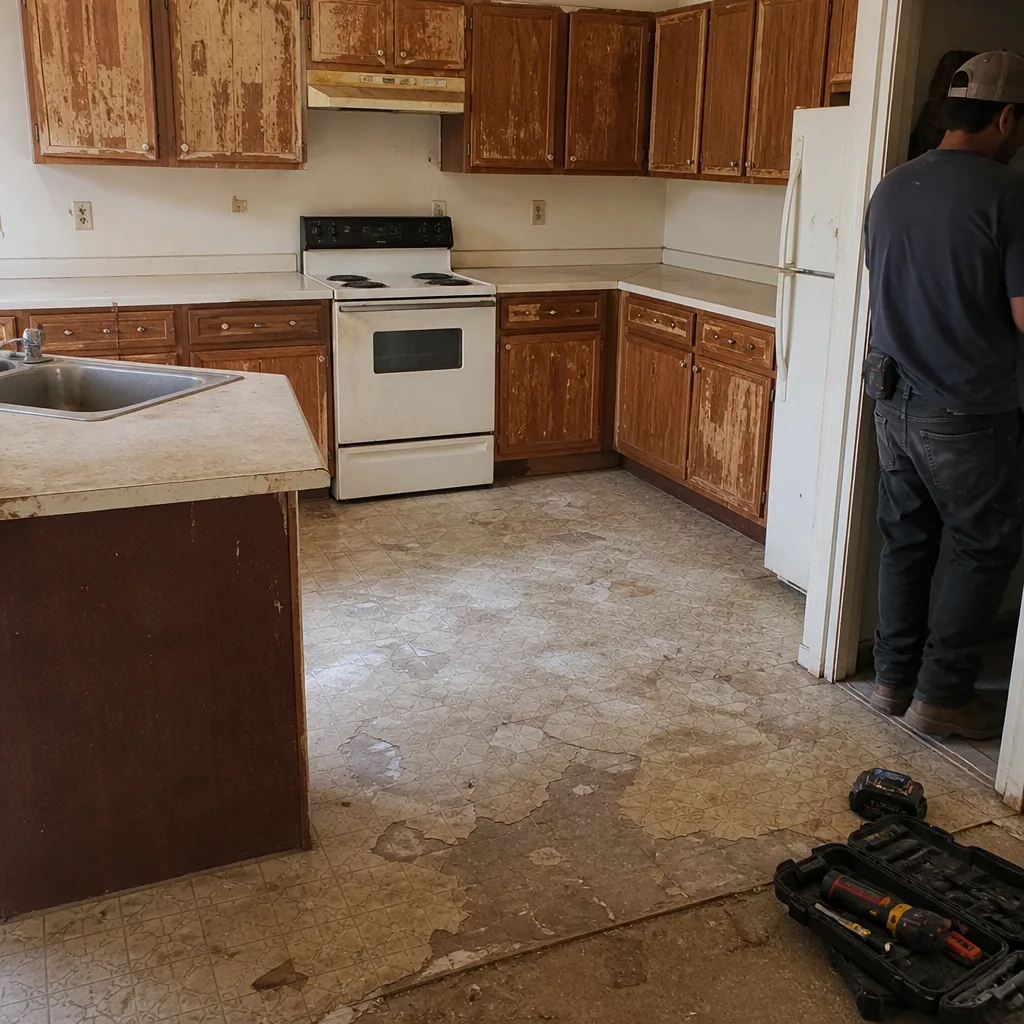 Before
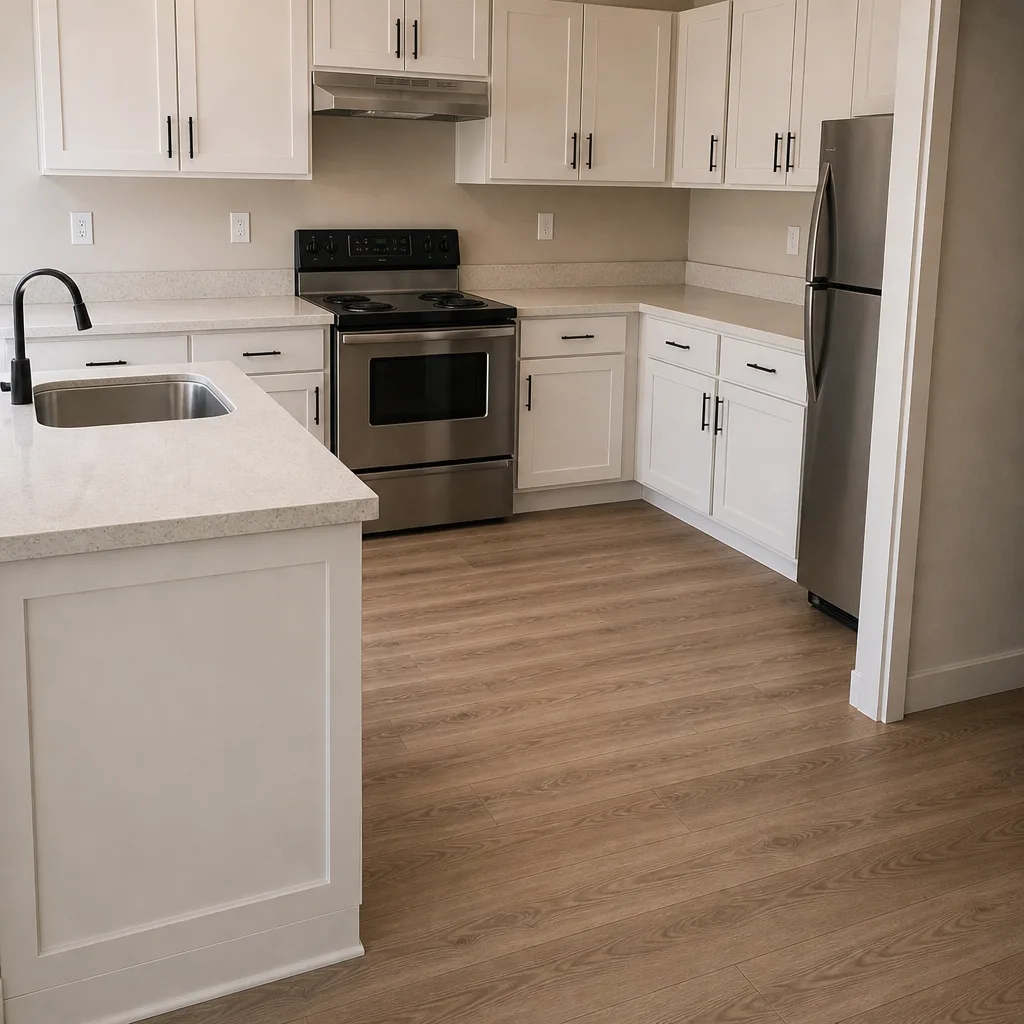 After
Tile vs Vinyl Plank Kitchen Flooring in Whitney, NV: The Slab Decides, Not the Showroom
Choose vinyl plank (LVP) if your Whitney kitchen sits on a slab that shows seasonal movement or has no uncoupling membrane; choose porcelain tile if you’re installing over a proper uncoupling membrane and want the resale value. That’s the honest bottom line. Whitney is an unincorporated Clark County community where nearly all the work is infill and remodel on aging tract housing, and the Mojave’s expansive clay soils push and pull at slab-on-grade foundations enough that your floor choice really comes down to how each material handles movement. Call (833) 570-8789 for a written price before you pick either.
Why Whitney Slabs Move (and Why Your Floor Has to Cope)
Whitney’s housing stock tells the story before you even lift a tile. Most of these are 1960s through 1990s single-story tract homes on slab foundations, stucco walls, and low-pitch roofs. No basements, no crawlspaces. The slab is your subfloor, and the soil under it is Mojave clay that swells when it takes on moisture and shrinks when it dries out. Clark County soil studies put that seasonal heave at enough to crack a grout joint by year two in a kitchen that wasn’t prepped for it.
Here’s what that means in practice. Porcelain tile is rigid. It doesn’t flex, and it doesn’t forgive. It transfers every bit of slab movement straight into the grout lines, which is why we see cracked joints in Whitney kitchens within one to three years when the tile was laid directly on the slab with a standard thinset and no membrane. LVP is a floating system. It rides on top of the slab and absorbs minor movement without cracking, because there’s nothing rigid bonded to the concrete to crack.
So the decision isn’t aesthetic. It’s structural. Which direction your slab wants to move, and whether the floor you pick can live with it.
The Single Detail Most Articles Skip: The Uncoupling Membrane
If you want tile in a Whitney kitchen, an uncoupling membrane goes down first. Ditra or an equivalent product creates a slip layer between the slab and the tile so the slab can move independently of the floor above it. Skipping this step is the most common reason tile floors fail early here, and it’s the detail generic comparison articles never mention because they’re written for slab conditions that don’t exist in the Mojave.
An uncoupling membrane costs more up front. It also adds a day to the schedule. But it’s the difference between a tile floor that lasts decades and one that’s cracking grout before the cabinets are even fully settled. When we quote a Whitney kitchen floor, the membrane is priced into the written estimate, not tacked on after you’ve approved a number. You see the real cost before any work starts, which is the whole point of the price-in-writing approach.
If the slab is already cracked or badly out of level, the membrane alone won’t save it. That’s where leveling compound comes in, and it’s another line item that quietly disappears from a lowball quote and reappears later. Oldcastle and Quikrete both make self-leveling products we use on Whitney slabs, and the right one depends on the crack pattern and how far the floor is out.

Head-to-Head: What Each Floor Actually Does in a Whitney Kitchen
| Factor | Porcelain Tile | Luxury Vinyl Plank (LVP) |
|---|---|---|
| Slab movement tolerance | Rigid; needs uncoupling membrane or cracks | Floating; absorbs minor movement |
| Underfoot in summer | Stores heat; south-facing kitchens hit 85°F+ indoors | Runs cooler; doesn’t hold heat |
| Resale value | Higher in Whitney’s tract-home market | Neutral; reads as budget to some buyers |
| Typical installed cost | $12-$28/sq ft with membrane and prep | $6-$14/sq ft installed |
| Water resistance | Excellent if grout is sealed | Waterproof core; forgiving of spills |
| Best fit for Whitney | Kitchens with stable slab + membrane budget | Kitchens with movement, tight budget, or fast timeline |
The heat factor surprises people. Whitney summers are brutal, and a south-facing kitchen can hit 85°F indoors before noon. Tile stores that heat and radiates it back at your feet. LVP stays cooler underfoot and doesn’t hold the day’s warmth into the evening. It’s not a reason on its own to pick LVP, but in a Whitney kitchen with west or south exposure, it’s a real comfort difference you’ll notice every summer afternoon.
What It Costs to Do Either One Right in Whitney
A full Whitney kitchen remodel runs $14,000-$45,000, and flooring is part of that number. Here’s how the line items break down so you can see whether tile or LVP fits your budget before you call anyone.
- Small kitchen remodel (including floor): $9,000-$20,000
- Cabinet installation (often paired with new floor): $4,000-$13,000
- Countertop installation (Cambria, Silestone, Caesarstone): $2,000-$6,500
- Backsplash installation: $800-$2,500
- Kitchen island installation: $3,000-$10,000
Those are cabinet, counter, and surface ranges. Flooring typically adds $6-$14 per square foot for LVP and $12-$28 per square foot for porcelain tile installed with membrane and leveling prep. A typical Whitney kitchen floor run is 120 to 200 square feet, so the material choice alone swings your budget by a couple thousand dollars. Our written price always includes the material tier and the substrate prep, so you aren’t quoted a floor price that silently excludes the leveling compound or the membrane.
If the floor is part of a bigger renovation, the related Kitchen Remodeling service page covers the full scope, and Kitchen Remodeling in Whitney breaks down how we handle these slab-on-grade kitchens specifically. For a sense of how we run whole projects, our home page explains The Relay Visibility Guarantee - live arrival time, photo updates before and after, and a written price before a single tool is picked up.
Permits and County Code: The Whitney Wrinkle
Whitney is unincorporated Clark County, which means county permits and county codes, not a city building department. For like-for-like floor replacement, a flooring permit usually isn’t required. But add tile in a wet area adjacent to plumbing, or move a drain to reposition a sink, and that triggers a county inspection. We pull the right permits and handle the county code compliance so you don’t end up with a stop-work order halfway through the job.
That distinction shapes every kitchen floor we quote in Whitney. It’s one of the reasons we walk the slab and check the plumbing layout before we recommend a material - the permit picture can change the answer.
How We Install a Kitchen Floor in Whitney
Our technicians have up to 21 years of experience, and the process for a Whitney kitchen floor is built around the slab, not around a template. We test the slab for movement and moisture, check the crack pattern, and confirm the existing plumbing layout. Then we recommend tile with an uncoupling membrane or a floating LVP system based on what the slab is actually doing. Sakrete and Quikrete leveling products handle the prep where the floor is out of level; premium LVP or porcelain brands handle the surface.
Every job operates under The Relay Visibility Guarantee: a written price before work starts, a live arrival time, and photo updates before and after. If a repair isn’t right, our 365-Day Done Right Promise covers it in writing for a full year. And our technicians are background-checked and uniformed, so you know exactly who is walking into your home before they arrive.
Frequently Asked Questions
Tile is better if your slab is stable and you install an uncoupling membrane first; vinyl plank is better if your slab shows movement, your budget is tight, or you want a floor that runs cooler in summer. Whitney’s expansive clay soils make slab movement common, so the membrane detail matters more here than it would in a stable-soil market. If you’re unsure which condition your slab is in, call (833) 570-8789 and we’ll walk it with you - estimates are free.
Installed LVP runs about $6-$14 per square foot in Whitney, while porcelain tile runs $12-$28 per square foot once the uncoupling membrane and leveling prep are included. A typical 120-200 square foot Whitney kitchen floor, then, lands roughly $800 to $2,800 for LVP and $1,400 to $5,600 for tile. Call (833) 570-8789 for an exact quote that includes the membrane and prep - estimates are free and in writing.
Tile floors crack in Whitney because the slab moves and rigid tile transfers that movement straight into the grout joints. Mojave clay soils swell and shrink with the seasons, and without an uncoupling membrane to separate the tile from the slab, cracks show up within one to three years. The fix isn’t thicker grout or a different tile - it’s installing the membrane before the first tile goes down. Call (833) 570-8789 to have your slab assessed before you commit to a floor.
Sometimes, yes, but only if the existing tile is well-bonded, flat, and the added floor height won’t interfere with cabinet toe kicks or door swings. We check bond strength and level before recommending it, because a floating LVP over loose tile will telegraph every failed tile beneath it. Call (833) 570-8789 for a no-pressure assessment - we’ll tell you straight whether it’s safe or whether the old floor has to come out.
Ready to Decide? Start With the Slab, Not the Swatch
If you’d rather have it looked at than guess, Sawyer Remodeling Whitney offers a no-pressure assessment in Whitney. We’ll test the slab, walk you through tile with membrane versus LVP, and hand you a written price before any work starts. Call (833) 570-8789 for a free estimate.
Written by the team at Sawyer Remodeling Whitney, serving Whitney, NV.