Last updated November 17, 2026







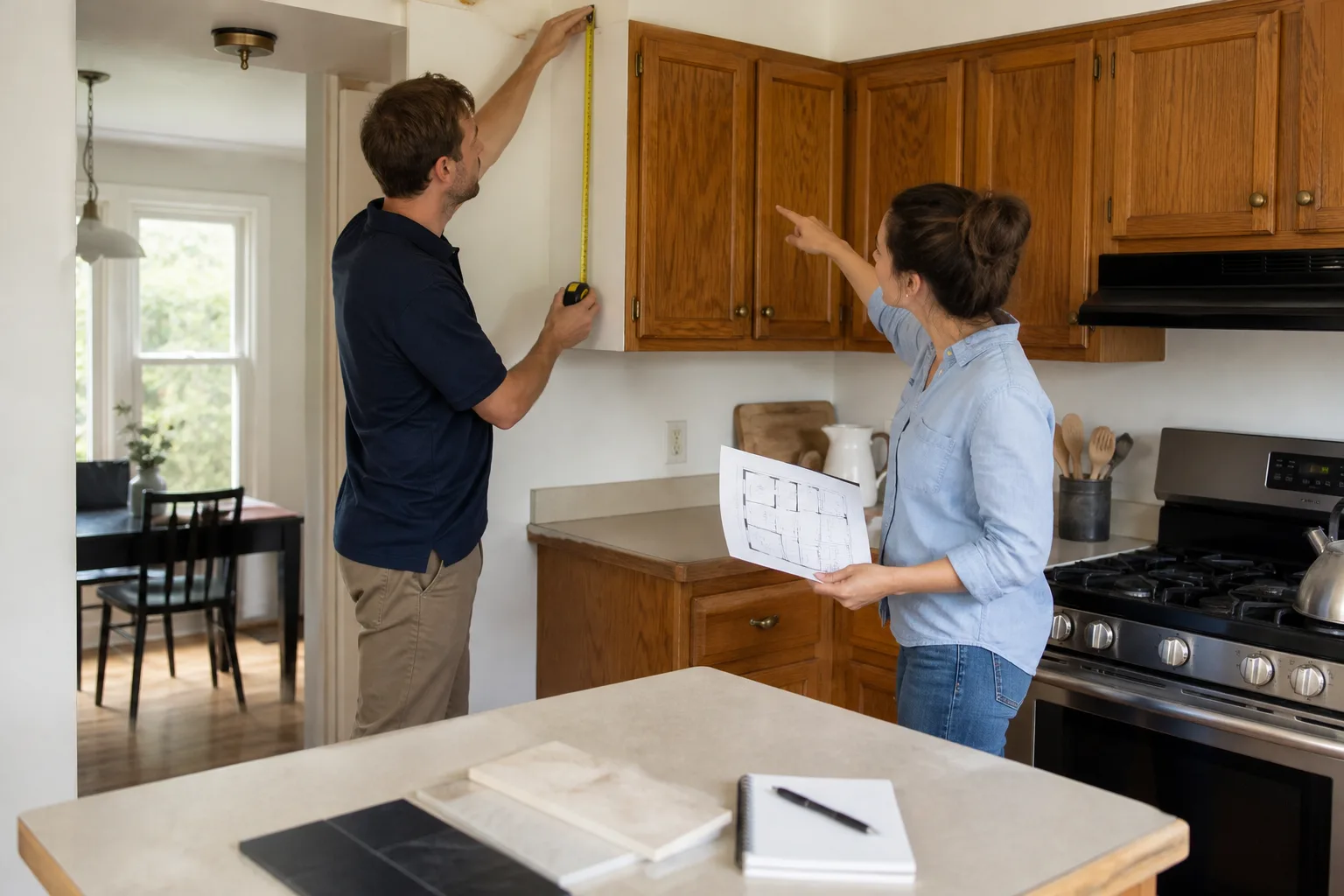
Free written scope consultation - allowances, timeline, and change-order rules on paper before a single trade is scheduled
Bathroom Remodeling Warning Signs Every Homeowner Should Know
If you can’t see your contractor’s waterproofing work before the tile goes up, ask for a photo. If they don’t have one, that’s your warning sign. Most bathroom remodel failures show up eighteen months later as a soft spot near the drain or grout that won’t stay white – and by then the evidence is buried under $6,000 of finished tile. The warning signs were there during construction; nobody knew how to read them. This guide teaches you to watch the process, not just the finished room, and it comes from what we’ve learned running bathrooms across Whitney and the surrounding valley.
Quick Answer
The biggest bathroom remodeling warning signs are invisible after the job is done: no pre-tile waterproofing photo, a quote with no line items, demo “surprises” that were predictable from the first walkthrough, and rushed cure times from a crew booked back-to-back. If you can spot those four things during construction, you’ll avoid almost every final-invoice blowup and every leak that shows up a year later.
Styles & brands we work with
- Kitchen remodeling
- Bathroom remodeling
- Home additions & ADU
- Roofing
- Windows & doors
- Driveway & pavers
- Fence
Table of Contents
- What proper shower waterproofing looks like before tile
- Demo discoveries: real scope changes vs. inflated ones
- Contract and pricing patterns that predict a higher final invoice
- On-site behavior red flags during construction
- Five things to check before you sign off
- Why Whitney bathrooms fail in specific ways
- Common mistakes to avoid
- When to call a professional
What Proper Shower Waterproofing Looks Like Before Tile
Waterproofing is the single most important step in a bathroom remodel, and it’s also the step you’ll never see again once the tile is set. A proper shower waterproofing system has three visible layers: a sloped mortar bed that drains toward the weep holes at the curb pan, a topical membrane (either a liquid roll-on like RedGard or a sheet membrane like Schluter Kerdi) covering the entire wet area wall-to-wall, and a Schluter edge trim (the metal strip that waterproofs where your tile meets the floor) sealing every transition. If a contractor can’t show you a photo of those three things dry and cured before tile goes on, you’re gambling on their memory.
Asking for a waterproofing photo is completely reasonable. We send one on every bathroom we run. That’s part of why a written process matters – on bathroom remodeling in Whitney, we treat the waterproofing photo as a required deliverable, not a favor. If your contractor hesitates at the request, ask why. There is no good answer.
What the photo should show
- A pre-sloped floor with visible slope toward the drain (a marble or level won’t sit flat), not a dead-level pan.
- Membrane coverage that runs at least six inches up every wall and over the curb, not stopping at the floor line.
- Seams and corners wrapped with the manufacturer’s banding, not caulked over.
- A weep hole protector still in place over the drain – if it’s already mortared over, the drain can’t weep.
- No cuts, punctures, or fastener heads poking through the membrane.
If your contractor frames waterproofing as a step they can skip to save time, they are telling you something about how they run every other step too. In our experience, the crew that rushes the membrane rushes the curb pan and the drain seal, and the leak starts at one of those two spots almost every time.
Demo Discoveries: Real Scope Changes vs. Inflated Ones
Almost every bathroom demo turns up at least one surprise. A 1970s Whitney home that’s had three remodels over the decades will open up to reveal things like two layers of subfloor, a shower valve that was never properly blocked in, or galvanized plumbing that should have been swapped out years ago. The question isn’t whether you’ll find something – it’s whether the discovery was predictable. Legitimate discoveries usually fall into a predictable list: rotten subfloor near the toilet flange, a wax ring that failed five years ago, missing stud cavity insulation on an exterior wall, or knob-and-tube wiring feeding a vanity circuit. These aren’t surprises to a contractor who’s seen a hundred Whitney bathrooms.
Inflated discoveries are the ones that appear only after the contract’s signed. “We found hidden water damage behind the wall” without photos of the damage. “The whole subfloor needs to come up” without a two-by-two square foot test area. “There’s mold” without a moisture reading or a visible scope. A legitimate discovery includes a photo, a moisture meter reading in percentage, and a line-item price before anyone touches that section of the job.
How to tell them apart
- Ask for the photo. Any legitimate scope change has a dated photo. No photo, no change order.
- Ask whether it was visible in the walkthrough. If a discovery is something you could have seen at the original estimate with a proper inspection, that’s a planning miss – and the contractor should eat part of that risk, not pass it to you.
- Compare to the written price. If the added cost appears only on the final invoice, not the change order, the price wasn’t real when you approved it.
- Ask what happens if you decline. A legitimate contractor will tell you what happens if you say no to an added waterproofing coat, a new valve, or a subfloor repair.
We’ve watched homeowners in Whitney get a written quote of $14,000 and a final invoice of $21,800 because nobody stopped the scope changes at the source. That gap is almost always predictable at the walkthrough stage.
Contract and Pricing Patterns That Predict a Higher Final Invoice
Before a single tool comes through the door, the contract tells you whether you’re looking at a written price or a low quote. A written price has line items: demo, rough-in, waterproofing, tile labor by square foot, tile material, fixtures, fixtures install, inspection and permit, cleanup, finish. A low quote has a number and a deposit request. The pattern that predicts a runaway invoice is almost always in how the price was presented, not what the price was.
The Relay Visibility Guarantee exists because those patterns are so common: a written price lands in your hands before any work starts, and the number on the invoice is the number you approved. That’s not a premium upgrade at general contractor work in Whitney – it’s the baseline of how every job should be run.
Red flags in the paperwork
- “Trust us” pricing. No line items, no written scope, just a total. Ask for the breakdown in writing; if they won’t provide it, they haven’t priced the job, they’ve guessed at it.
- Deposit-heavy schedules. A 50% deposit before demo reflects either thin cash flow or a plan to fund the job from your deposit alone. A 10 – 20% deposit at signing is normal; 50% up front is a warning.
- No line for permit or inspection. In Whitney, a bathroom remodel that touches plumbing or electrical requires a permit through Clark County, and the line item should be there. No permit line means someone plans to skip it.
- Bid doesn’t match scope. If the quote lists a $6,000 tile job but the scope calls for floor-to-ceiling tile in a 5×8 bathroom with two niches and a bench, that number is a placeholder.
- Missing allowance lines. Fixtures, tile, and hardware are usually allowances – if the contractor doesn’t state the allowance dollar amount, the final change order will.
- “Materials extra” buried in fine print. If the contract says materials are billed at actual cost with no cap, your good quote has no ceiling.
A written, line-item price and a scope defined by what’s included – not just by what’s excluded – is the single best predictor that your invoice matches your quote. If the paperwork doesn’t give you that, ask for it before you sign anything.
On-Site Behavior Red Flags During Construction
Once demo’s underway, the way a crew works tells you more than the finish later. Bathroom remodels are a compressed sequence: demo, plumbing rough-in, electrical rough-in, inspection, waterproofing, tile, grout, trim, fixtures, paint. Every step depends on the one before it. The warning signs are almost always a crew trying to run two jobs out of one day, or one crew running two bathrooms at once, and the shortcuts fall on the steps you can’t see.
We’ve run bathrooms for up to 21-year technicians, and the pattern is consistent: the job that gets the most attention finishes fastest. The job that gets squeezed finishes with a list of defects.
What to watch for during the build
- No subfloor inspection after demo. Once tile comes up, a contractor should pull a level across the subfloor and check for deflection and soft spots before anything else happens. If they go straight to backer board, the subfloor below is unverified.
- No moisture barrier discussion. Bathrooms are the wettest room in the house. Your contractor should be able to explain where the moisture barrier goes, what product they’re using, and why – in plain words, not trade jargon.
- Back-to-back scheduling that rushes cure times. Thinset needs time, grout needs 24 hours before a wet test, and a shower liner needs a flood test before tile. If a crew is grouting at 5 p.m. on the same day as tile and moving to the next job at 7 a.m., the cure times are theoretical, not real.
- Different crew every day, with no handoff. A bathroom is a relay. The electrical rough-in person, the tile setter, the drywall finisher – someone needs to own the handoff. If each arrives to a job they’ve never seen, details get lost.
- No live arrival time. On a job that runs three to four weeks, you should know who’s coming and when. A live arrival time is a basic courtesy, and its absence usually signals how the rest of the job is running.
- Vanity set before wall paint and trim. The final trim sequence matters; the vanity blocks the wall behind it. If it’s set early, the paint behind it never gets finished properly.
- No photos along the way. If the only photos you see are the finished results, ask for progress photos of the plumbing rough-in, the waterproofing, and the subfloor. Any contractor running a real process has them.
Behind these surface behaviors, there’s a deeper issue: a crew that can’t plan a bathroom can’t be trusted with the parts you won’t see. If you’re getting ready to interview contractors, kitchen remodeling in Whitney runs on the same discipline, and asking the same questions there is just as fair.
Five Things to Check Before You Sign Off on a Finished Bathroom
The final walkthrough is your last clear chance to catch defects before you sign and release final payment. A proper walkthrough takes an hour and involves testing the bathroom the way it’ll be used, not just looking at it. Here’s what to check, in order.
- Run the shower for 15 minutes. Watch the flow at the drain. Then step outside the shower and touch the baseboard on the opposite wall and the ceiling below (if you have a downstairs bathroom). A wet spot means a curb pan or membrane failure – that has to be fixed before sign-off, not after.
- Test the flood test result. Ask if the shower pan was flood-tested (a plug in the drain, 2 inches of water, 24 hours, no loss). Every proper shower gets one. If the contractor says “we don’t do that,” they skipped a step.
- Check the grout lines for consistency and the caulk joints for movement. The tile-to-tub and tile-to-floor transitions should be caulk, not grout. Grout there cracks when the tub flexes, and the crack becomes a water path. A quality job uses a color-matched silicone at every change of plane.
- Run every fixture independently. Sink, shower, tub, toilet, and vanity light – each on its own, then all at once. Low pressure with everything running points to undersized supply or a partially closed valve. A slow drain points to a rough-in problem that shouldn’t have passed inspection.
- Look at the finish edges in a straight line. Stand at the doorway and sight down the wall at the tile, the mirror, the vanity, and the trim. A quality job has consistent grout line thickness and no visible lippage (tile edges that don’t sit flush). Run a level across the floor and the shower curb.
Finish with the paperwork: a written punch list, a signed guarantee document, and the manufacturer warranty cards for the fixtures. If any of those is missing, ask for them before releasing final payment. On a Sawyer Remodeling Whitney job, the 365-Day Done Right Promise is a written document, not a verbal commitment – if it’s not done right within that year, we make it right.
Why Whitney Bathrooms Fail in Specific Ways
Whitney sits in the Las Vegas Valley, and the local climate puts a specific set of pressures on bathroom construction. The summer heat bakes exteriors at 110°F-plus; the interior runs air-conditioned; and bathrooms in older Whitney homes – particularly the 1970s and 1980s builds common off Boulder Highway and around Whitney Mesa – were built before modern waterproofing standards. That combination drives a predictable set of failures we see across Whitney jobs.
- Hard water scaling. Whitney’s water runs hard (roughly 270 ppm on average), so shower glass, fixtures, and tile grout scale faster than in most of the country. This stresses waterproofing seams and any caulk joints that weren’t correctly installed – a bad shower membrane fails visibly in Whitney within a year, where it might take three elsewhere.
- Valley soil movement. Whitney sits on expansive clay soils that swell and shrink with the seasonal monsoon. Bathroom floor tile set on a thin-set bed over a moving subfloor cracks at the joints first; a properly installed uncoupling membrane handles that movement. A bathroom that skips it doesn’t.
- Older builds with undersized plumbing. Pre-1990 Whitney bathrooms often have 1.5″ drain lines and half-inch supply lines that are borderline for a modern rain showerhead. Contractors who don’t run a flow calculation before install show up as “weak pressure” later.
- Permit attention in Clark County. Bathroom remodels that touch plumbing or electrical require a permit, and Clark County inspectors are thorough on rough-in. A contractor who quotes without a permit line is a contractor planning to skip the inspection.
- Slab construction. Many Whitney homes are single-story slab; relocating a drain or moving a fixture means saw-cutting the slab, which adds real cost. A quote that ignores this on a layout change is a quote that will grow.
If you’re remodeling a Whitney bathroom, ask specifically how the contractor handles these local conditions: the waterproofing product, the uncoupling membrane, the flow test on the showerhead. Their answer is worth more than the quote number. Our Sawyer Remodeling Whitney home page spells out how a job runs, and the details there are what to expect on your own job.
Common Mistakes to Avoid
- Signing a quote that has no waterproofing line. The step you can’t see is the step worth verifying in writing – if the contract doesn’t name the waterproofing product or schedule a pre-tile photo, add it before you sign.
- Paying a 50% deposit up front. That deposit funds the job from your cash alone. A 10 – 20% deposit at signing is normal; anything above that shifts the risk to you.
- Trusting a verbal “we’ll take care of it” on a scope change. Any demo discovery that adds cost needs a written change order with a dated photo and a line-item price. Without those three, the number isn’t real.
- Letting the crew close out grout and start the next job the same day. Thinset, grout, and caulk all need cure time. If a crew is moving between bathrooms on a 24-hour rotation in Whitney, the schedule is real and the cure times aren’t.
- Skipping the flood test. A 24-hour flood test on the shower pan is the cheapest way to catch a membrane failure, and it takes one day. If it wasn’t done, you’re finding out in the finished shower.
- Releasing final payment before a written punch list is complete. Final payment is the only leverage you have. Hold the last 5 – 10% until the punch list is signed off and the manufacturer warranty cards are in hand.
- Not checking the permit status. In Clark County, an unpermitted bathroom remodel can surface as a problem at resale. Ask for the permit number and check that it was pulled before demo.
When to Call a Professional
Some warning signs are worth noting and some are worth a call. If you’ve found water staining in the ceiling below the bathroom, a soft subfloor around the toilet, mold visible at the shower curb, or a shower pan that loses water within 24 hours, that’s a call now. If your contractor won’t provide a waterproofing photo, a line-item price, or a written change order on a scope addition, that’s also a call – and what you’re calling about is a second opinion. Kyle’s a good friend to have in your phone book, and so is a contractor whose process you can actually verify.
Sawyer Remodeling Whitney offers free estimates in Whitney. Call (833) 570-8789 to schedule yours; the written price lands in your hands before any work starts. We’ve seen every one of the warning signs in this guide show up on jobs elsewhere – and we’ve built our process, The Relay Visibility Guarantee, specifically so you don’t have to guess.
See the difference
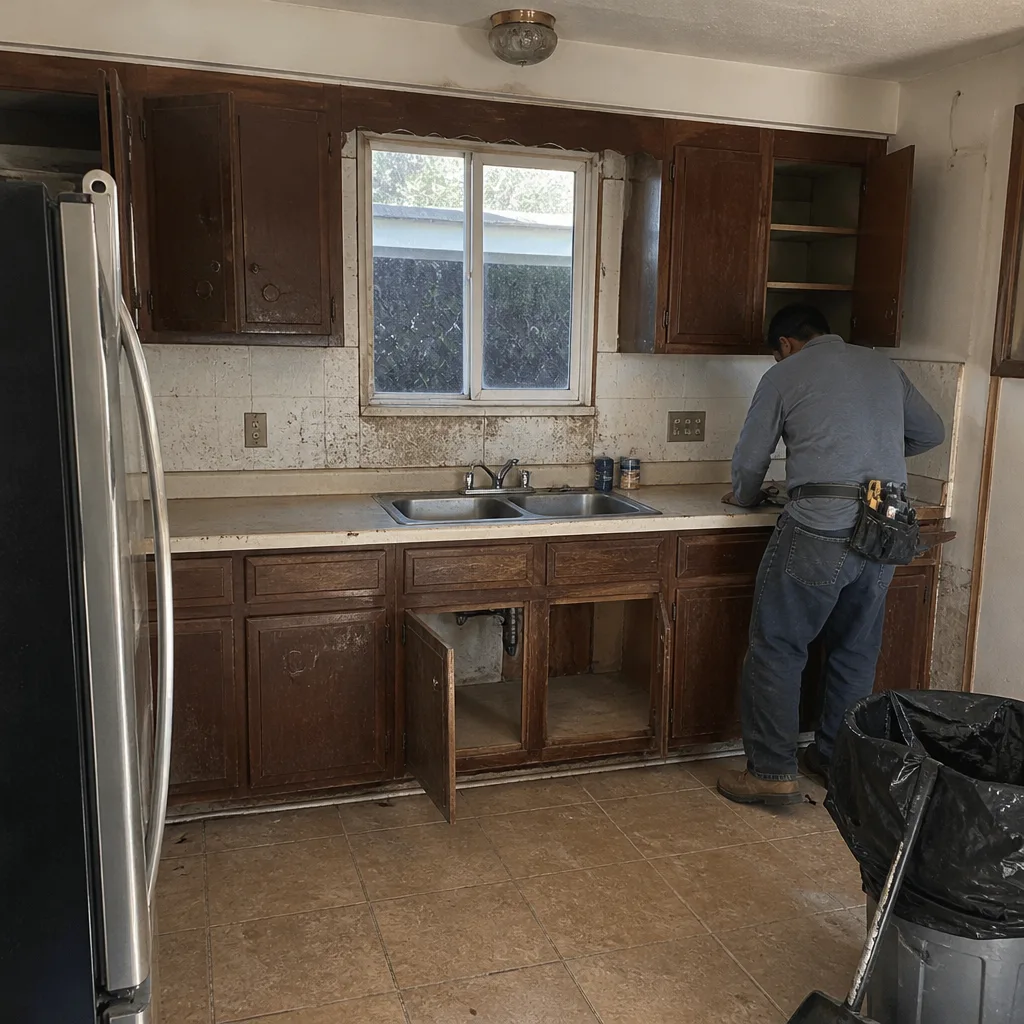 Before
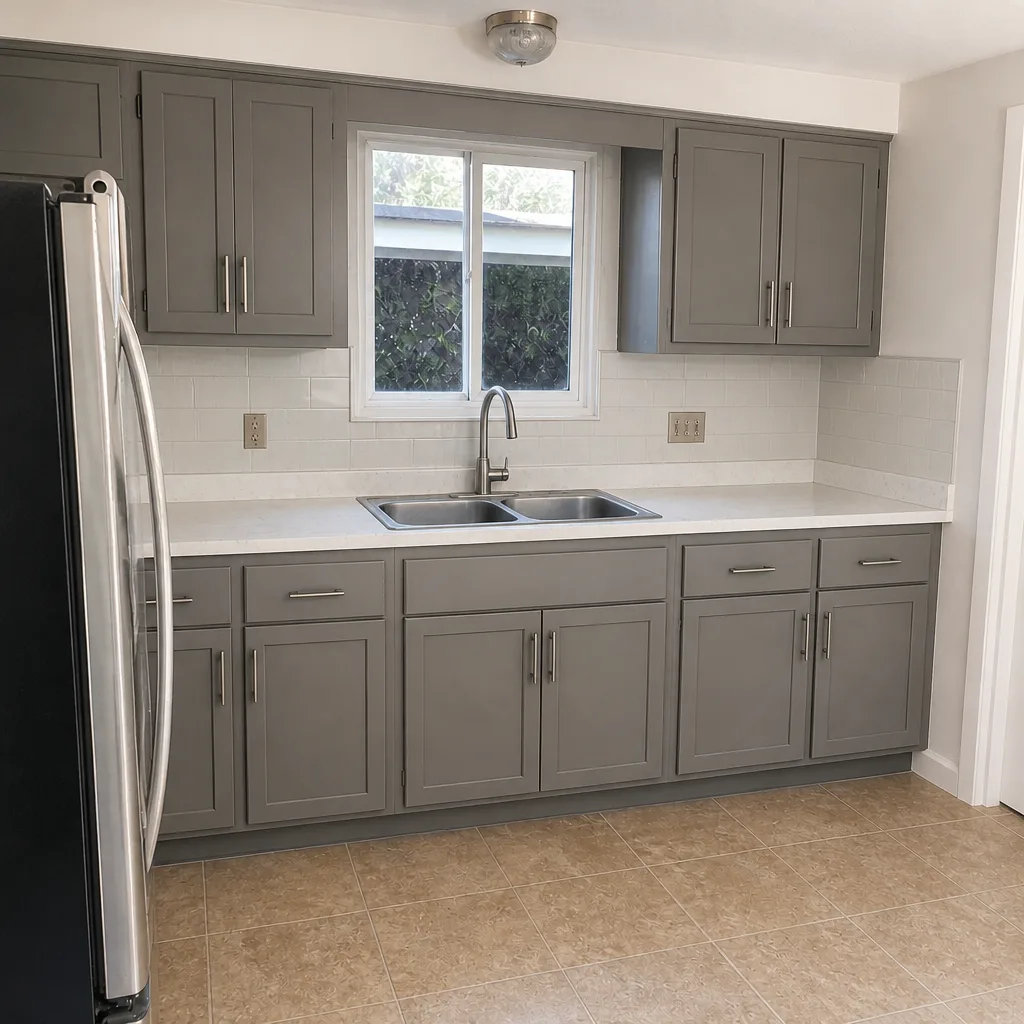 After
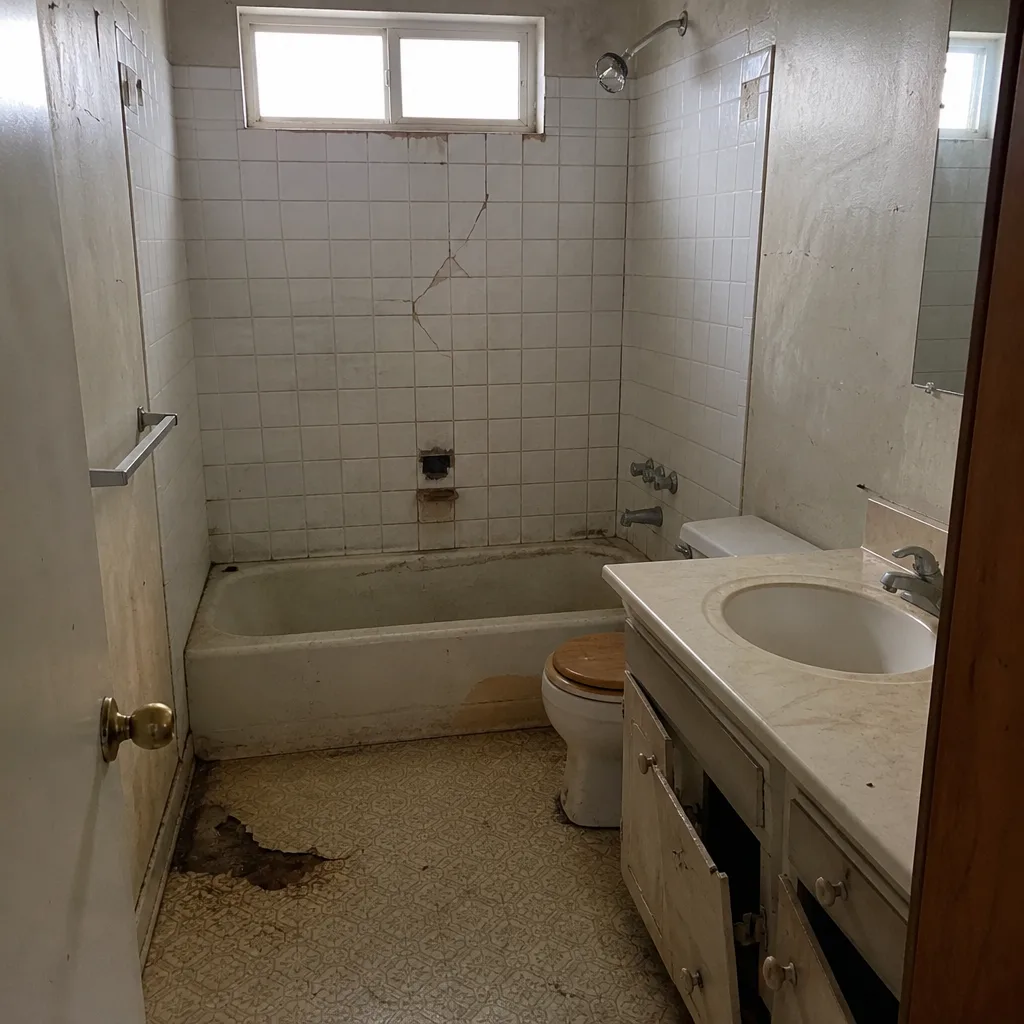 Before
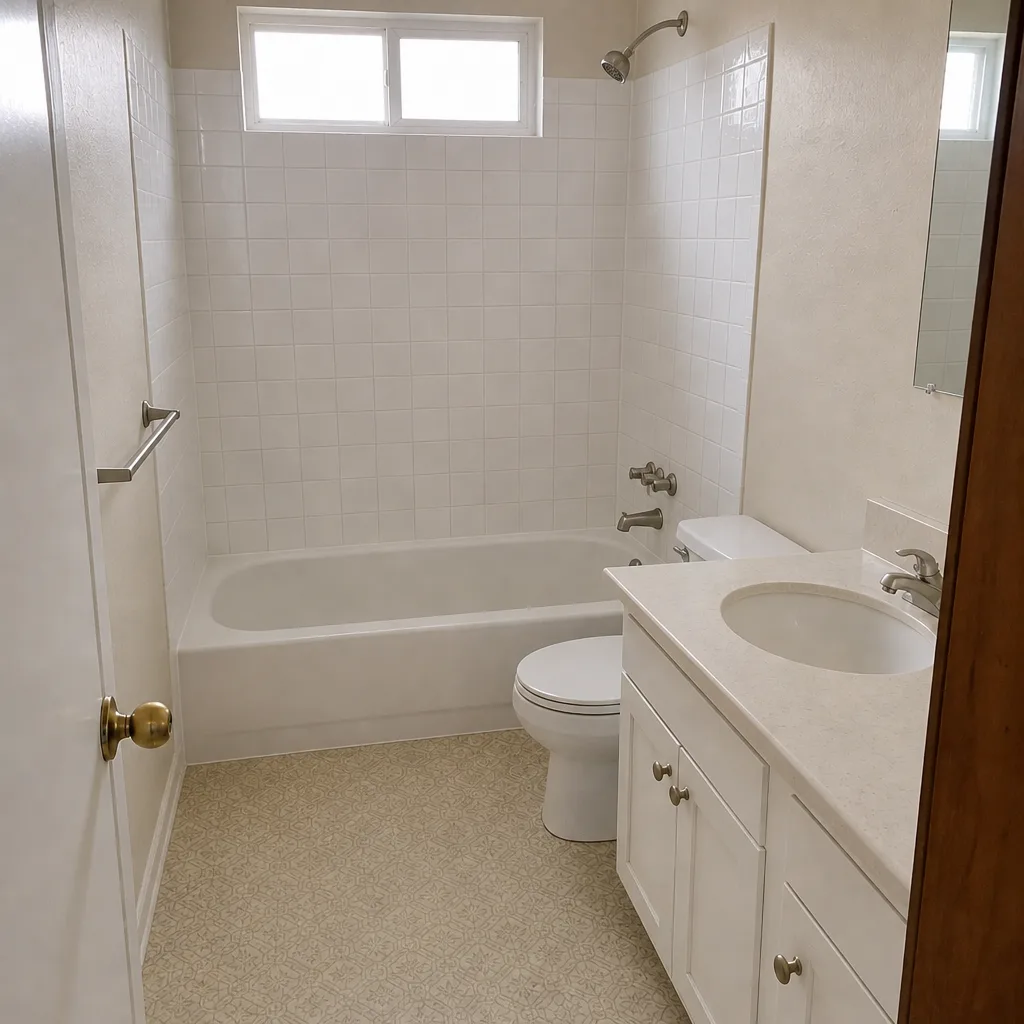 After
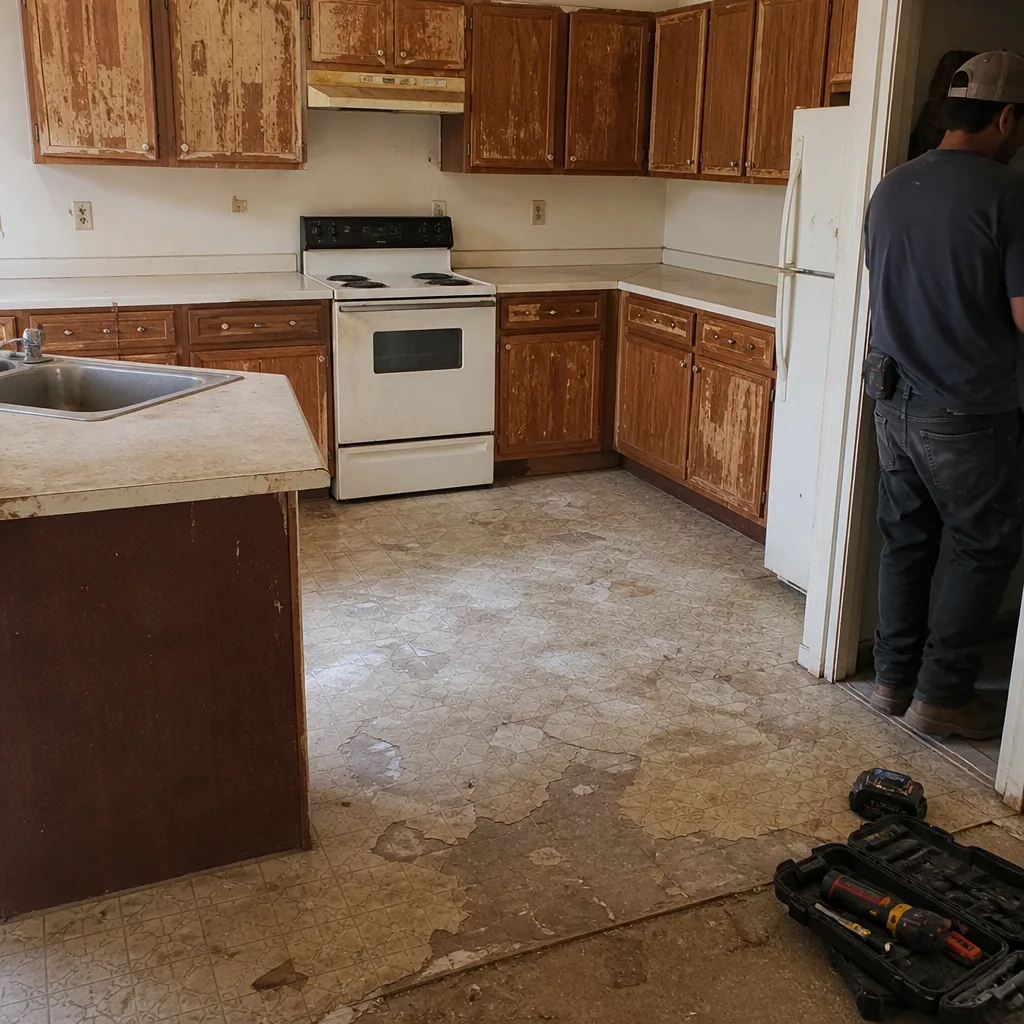 Before
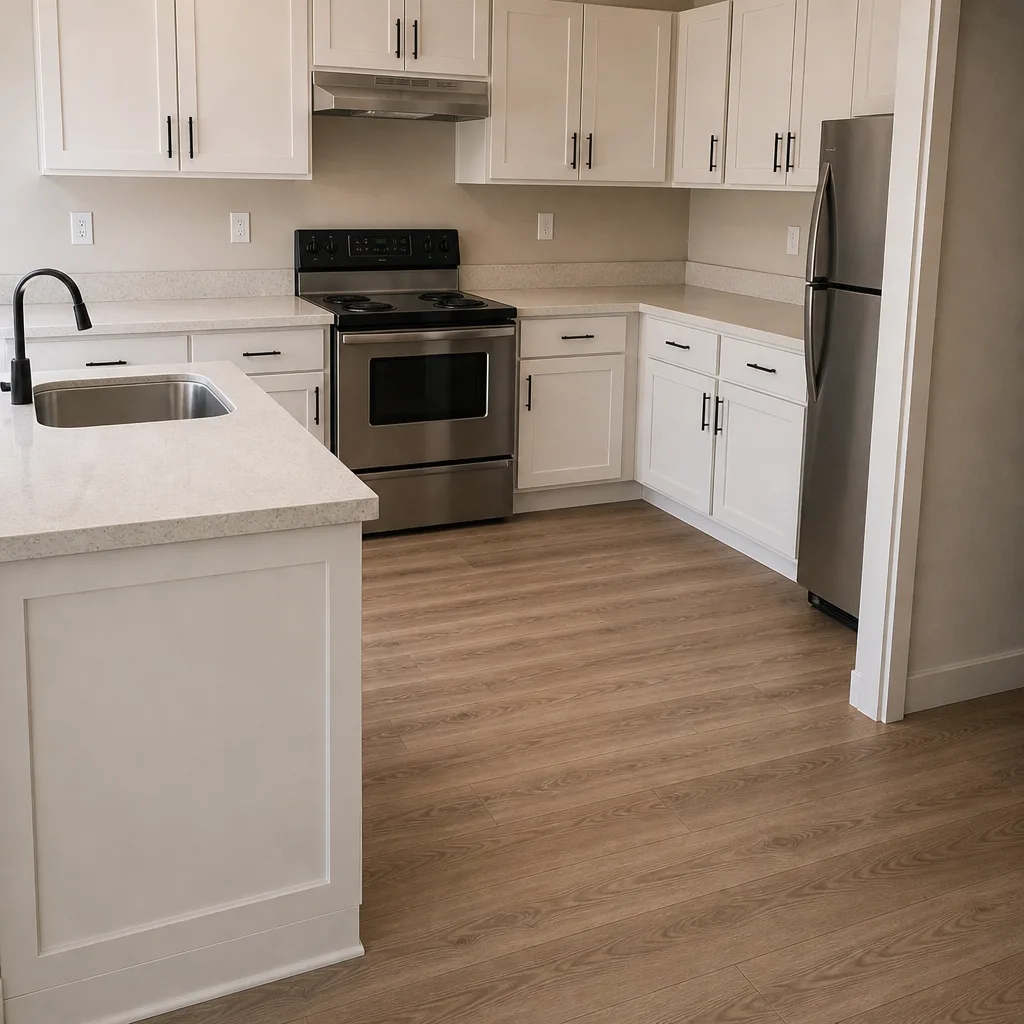 After
Frequently Asked Questions
A typical Whitney bathroom remodel runs $14,000 – $28,000 for a hall bath and $25,000 – $55,000 for a primary bathroom, depending on tile selections, fixture brand tier (KraftMaid or Wellborn cabinetry sits differently than a semi-custom build), and whether the layout moves plumbing. The best way to pin a number is a free in-home estimate with a written line-item price. Call (833) 570-8789 for an exact quote – estimates are free.
Not if the scope is written and line-itemed properly. Demo discoveries do happen on Whitney homes – a failed wax ring, an unplanned slab cut, a valve that needs replacing – but they should arrive as a written change order with a photo and a dollar amount, not a final invoice line. With a written price in hand before work starts, the number on the invoice is the number you approved.
Yes. Bathroom remodels in Whitney that touch plumbing or electrical require a permit through Clark County, and the permit line should be in your written scope. If a quote doesn’t include it, ask why. Our estimates include the permit and inspection line up front, so there’s no surprise at the final invoice.
Ask again, and if they still don’t have one, that’s a warning sign worth acting on. A waterproofing photo – membrane in place, pre-tile, dated – is a reasonable request and a standard part of a well-run job. If it can’t be produced, ask when the waterproofing was done and who checked it. If the answers are vague, get a second opinion before plumbing gets covered.
A full bathroom remodel in Whitney typically takes 3 – 5 weeks from demo to final walkthrough, depending on tile complexity and whether the layout changes. A change that moves a drain or a shower valve can add a week because of the slab cut and re-inspection. Any quote that promises two weeks for a full gut in Whitney is a quote that’s skipping cure times or running two jobs out of one crew.
It covers the work we perform for a full year after the project closes. If something we installed isn’t right – a failing caulk joint, a grout line that opens, a fixture that wasn’t set correctly – we make it right, backed in writing. Free second visit if the repair fails. That’s the promise, in plain terms.
The Bottom Line
The warning signs of a bad bathroom remodel are almost all visible during construction, not after. Ask for the waterproofing photo before tile. Demand a written, line-item price before you sign. Treat every scope change as a change order with a photo, not a verbatim addition to the final invoice. Watch the crew’s schedule – rushed cure times and back-to-back jobs show up as leaks and cracks a year later. And before you release final payment, run the shower for 15 minutes, ask for the flood test, and check every finish line. A Whitney bathroom that’s built well is a bathroom you don’t think about for twenty years. If you’re getting ready to start one, get a real estimate first – we’ll show you exactly what’s included and what it costs before you commit a dollar.
Call (833) 570-8789 to schedule your free estimate. A live person answers, day or night, every day of the week.
Written by the team at Sawyer Remodeling Whitney.