Last updated November 17, 2026







Free written scope consultation - allowances, timeline, and change-order rules on paper before a single trade is scheduled
DIY vs Professional Bathroom Remodeling: What’s Safe to Do Yourself
Painting a bathroom yourself saves a few hundred dollars and carries almost no risk of damaging the house. Relocating a drain line yourself can void your homeowner’s insurance if that joint leaks into a subfloor, and the repair can run into the thousands. The distance between those two jobs isn’t effort or confidence. It’s consequence. That’s the line we use on every bathroom in Whitney, and it’s the line this guide follows: not which tasks are hard, but which tasks have hidden downstream costs when they go wrong. By the end, you’ll know exactly which parts of a remodel are safe to take on and which parts should sit with a licensed pro.
Quick Answer
Cosmetic work – painting, swapping a vanity, replacing a mirror, regrouting – is safe to do yourself and rarely causes problems. Waterproofing, tile over a wet area, and every change to plumbing, electrical, or framing are the high-consequence tasks: they require permits in Clark County, and mistakes show up months later as rot, mold, or failed inspection. The safe split is to do the low-risk finishes yourself and hand off the high-consequence trades to a licensed professional.
Styles & brands we work with
- Kitchen remodeling
- Bathroom remodeling
- Home additions & ADU
- Roofing
- Windows & doors
- Driveway & pavers
- Fence
Table of Contents
- The Risk-Tier Framework: Sorting Tasks by Consequence, Not Difficulty
- What’s Genuinely Safe to DIY in a Bathroom
- Tile and Waterproofing: The Task Homeowners Overestimate Most
- Nevada and Clark County Permits: What Legally Needs a Licensed Contractor
- The Real Cost of DIY Mistakes That Need a Pro to Fix
- Hybrid Project Planning: How to Split the Work Safely
- Why Whitney’s Climate Makes Waterproofing Matter More
The Risk-Tier Framework: Sorting Tasks by Consequence, Not Difficulty
Most DIY advice sorts tasks by how hard they look. That’s the wrong test. A tile layout can look intimidating and still be a fine DIY job if the waterproofing behind it was done right by someone else. A small drain reroute can look easy and wreck a ceiling below. Sorting by consequence instead of difficulty is how we plan every bathroom in Whitney.
Here’s the framework we use, in three tiers:
- Tier 1 – Cosmetic (safe to DIY). Painting, caulking, swapping a vanity top that sits on an existing cabinet, replacing a mirror or light fixture on an existing circuit, new towels and hardware. If it goes wrong, you redo it. Nothing behind the wall changes.
- Tier 2 – Skill-dependent (DIY only if you’ve done it before). Setting tile, building a shower pan, waterproofing a wet area, installing a new floor over a sound subfloor. Mistake consequences here are delayed – a slow leak or a failed membrane that shows up in six to eighteen months.
- Tier 3 – Permit and consequence territory (hire a licensed pro). Moving or adding plumbing supply or drain lines, relocating a toilet, adding a circuit or moving an outlet near water, removing a wall, changing the framing around a shower. These carry code requirements, inspection, and real structural or insurance exposure.
The framework holds whether you’re in a 1990s tract home in Whitney or a newer build with a curbless shower already framed in. What changes is the cost of the mistake, not the category. A Tier 3 task in a small hall bath is still a Tier 3 task. If you’re planning a full renovation and want the whole scope priced in writing, our bathroom remodeling in Whitney page walks through the pieces of a project line by line.
What’s Genuinely Safe to DIY in a Bathroom
The safe-DIY zone is the finishes – the parts of a bathroom that a homeowner can change without touching anything behind the wall, under the floor, or inside the panel. These are the jobs where a mistake costs you a Saturday and a second can of paint, not a repair bill.
- Painting walls, ceiling, and trim. Use a bathroom-rated paint with a mildew-resistant additive. This is the highest-value DIY task in the room.
- Caulking the tub and shower perimeter. Remove the old bead fully, dry the joint, and use 100% silicone in wet areas. Recalking every few years prevents a surprising amount of water intrusion.
- Replacing a vanity top on an existing cabinet. If the plumbing connections stay in the same place, swapping a top and sink is a manageable DIY with a helper.
- Swapping a light fixture on an existing circuit. Power off at the panel, match the wiring, done. This is fixture replacement, not new wiring.
- New mirror, hardware, towel bars, and a showerhead on an existing arm. Cosmetic, reversible, low risk.
- Regrouting joints that are still sound. Scraping and replacing grout – not rebuilding a shower – is a reasonable DIY task if the tile and substrate are healthy.
Notice what’s missing: anything that changes where water goes, where electricity goes, or what holds the wall up. Those belong in the tiers below.
Tile and Waterproofing: The Task Homeowners Overestimate Most
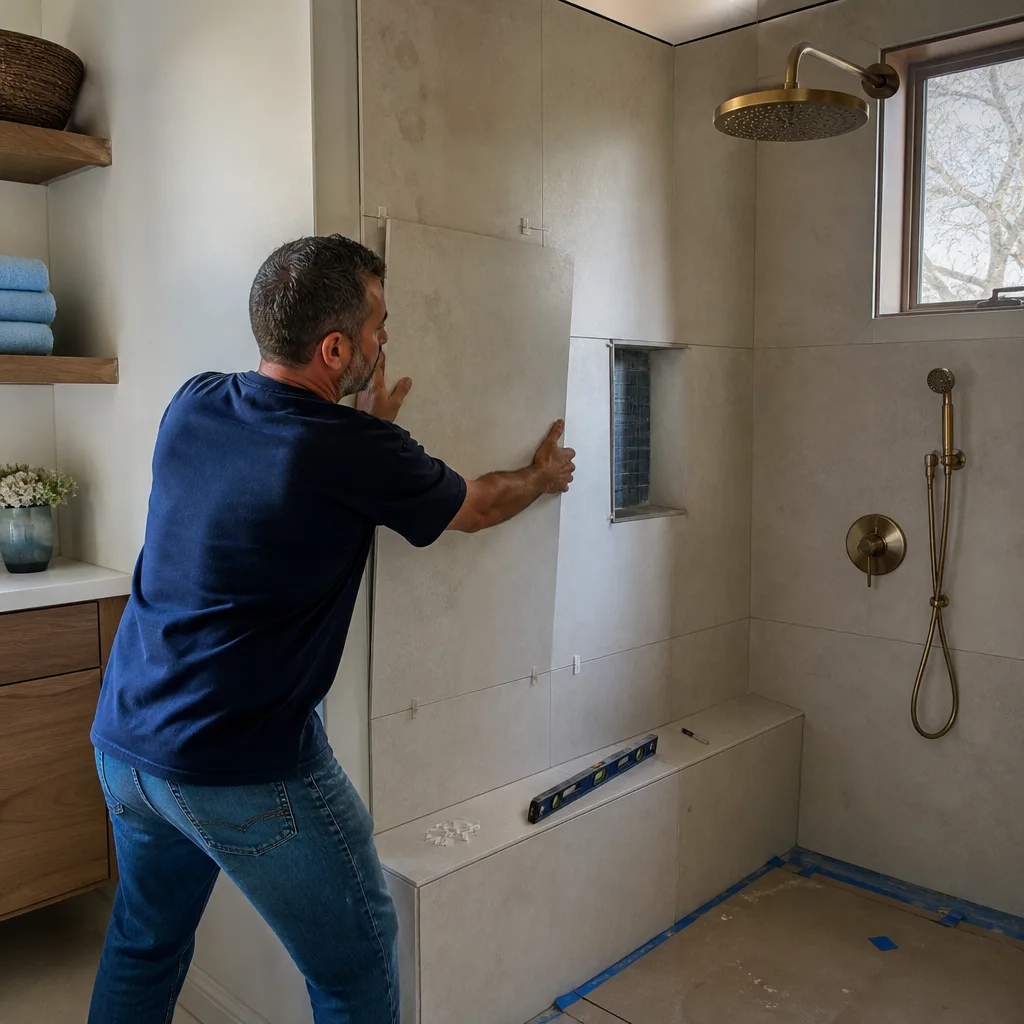
Tile is the job people most often think they can handle, and it’s the one that fails most quietly. The tile itself is decoration. The waterproofing behind it is the actual barrier, and it’s invisible once the job is finished. A beautiful tile job over a failed membrane is a shower that will eventually rot the framing behind it. In our experience, that’s the single most expensive type of DIY misstep in a bathroom.
Before you decide to DIY tile, answer these honestly:
- Have you built a sloped shower pan before, or only set tile on a flat floor?
- Do you know what a Schluter edge trim is and where it belongs? (It’s the metal or PVC strip that hides and finishes the tile edge where it meets drywall or floor.)
- Can you name the waterproofing system you’re using and how it ties into the drain?
- Do you know the required slope to the drain and how to check it with a level?
- Are you prepared to redo the whole thing if a flood test fails?
- Do you have a plan for the transition where tile meets an existing subfloor, so it doesn’t crack?
- Are you willing to give up weekends for a slow, methodical cure schedule?
If any of those answers is “not really,” setting the tile is fine – building the shower pan and waterproofing it is the part to hand off. That’s the split we recommend most often in Whitney: a licensed pro preps and waterproofs, a homeowner who wants the satisfaction can set the surface tile. The result is a shower that looks the same and doesn’t leak. If you want the full sequence, our team can pricing it out as a scoped package.
Nevada and Clark County Permits: What Legally Needs a Licensed Contractor
In Clark County, the state and local rules are specific about which bathroom work needs a permit and a licensed contractor. Homeowners can pull certain permits for their own primary residence in some cases, but most plumbing, electrical, and structural changes must be done by a licensed contractor and inspected. This isn’t paperwork for its own sake – the inspection is the only independent check on the work behind the wall.
The tasks that typically require a licensed contractor and a permit in Whitney and the rest of Clark County:
- Moving or adding plumbing supply or drain lines. Relocating a toilet, sink, or shower drain, or adding a new fixture, triggers permitting.
- Any electrical work beyond a like-for-like fixture swap. New circuits, adding outlets near water, moving switches, or adding a fan on a new run.
- Removing or altering a wall, including a load-bearing wall. Structural changes require engineering and inspection.
- Changing the framing or layout around a shower or tub. Resizing a shower enclosure, moving the drain, or converting a tub to a walk-in shower.
- Gas line work. If the bathroom shares a wall with a gas appliance, any gas line alteration is licensed work.
Two practical points we tell every Whitney homeowner. First, an unpermitted remodel can complicate a future sale – buyers and inspectors will ask, and the fix can mean opening walls. Second, most homeowner insurance policies exclude damage from unpermitted work, which turns a $400 pipe reroute into a five-figure subfloor and ceiling repair if it leaks. The permit is cheap compared to the consequence. For the wider set of projects that need a licensed contractor, our general contractor in Whitney page lays out what a permit-and-inspection process actually looks like.
Safety note: this is a guide, not a code book. Electrical work at the panel and any gas line work are genuinely dangerous. Don’t open a panel or touch a gas line yourself – leave it to a licensed electrician or plumber.
The Real Cost of DIY Mistakes That Need a Pro to Fix
DIY failures are rarely dramatic. They’re slow, and the fix is usually more expensive than the original job would have been. Here’s what we typically see, with realistic ranges for the Whitney market. These are ranges, not quotes – actual cost depends on how much has to be opened up and how far the damage has spread.
- Shower pan or waterproofing failure. Repairing the membrane, replacing rotted framing, re-tiling, and repainting the ceiling below typically runs $3,500 to $8,000 or more depending on how long it leaked.
- Leaking drain connection under a new floor. Pulling up tile, replacing damaged subfloor, and redoing the shower base runs $1,800 to $4,000.
- Unpermitted electrical near water. Correcting the work to pass inspection, plus the inspection itself, is usually $400 to $1,200 – but the real cost is the insurance gap.
- Failed tile over a bad substrate. Tear-out, new backer board, and re-set commonly runs $2,000 to $5,000.
- Unpermitted structural or layout change discovered at sale. Retroactive permitting, engineering, and inspection can run $3,000 to $10,000 and delay a closing.
The pattern is the same every time: the cost to have a licensed pro do the task correctly the first time is usually a fraction of the cost to fix a failed DIY attempt. That’s the argument for hiring out Tier 3 work – not that DIY is bad, but that the downside is asymmetric.
Hybrid Project Planning: How to Split the Work Safely
You don’t have to choose between a full DIY and a full pro project. The most cost-effective bathroom remodels we see in Whitney are hybrids – homeowners do the parts that carry no consequence, and a licensed pro handles the parts that do. Here’s the sequence we recommend:
- Plan the layout first. Decide whether anything is moving – fixtures, walls, plumbing. This determines what needs a permit and a pro.
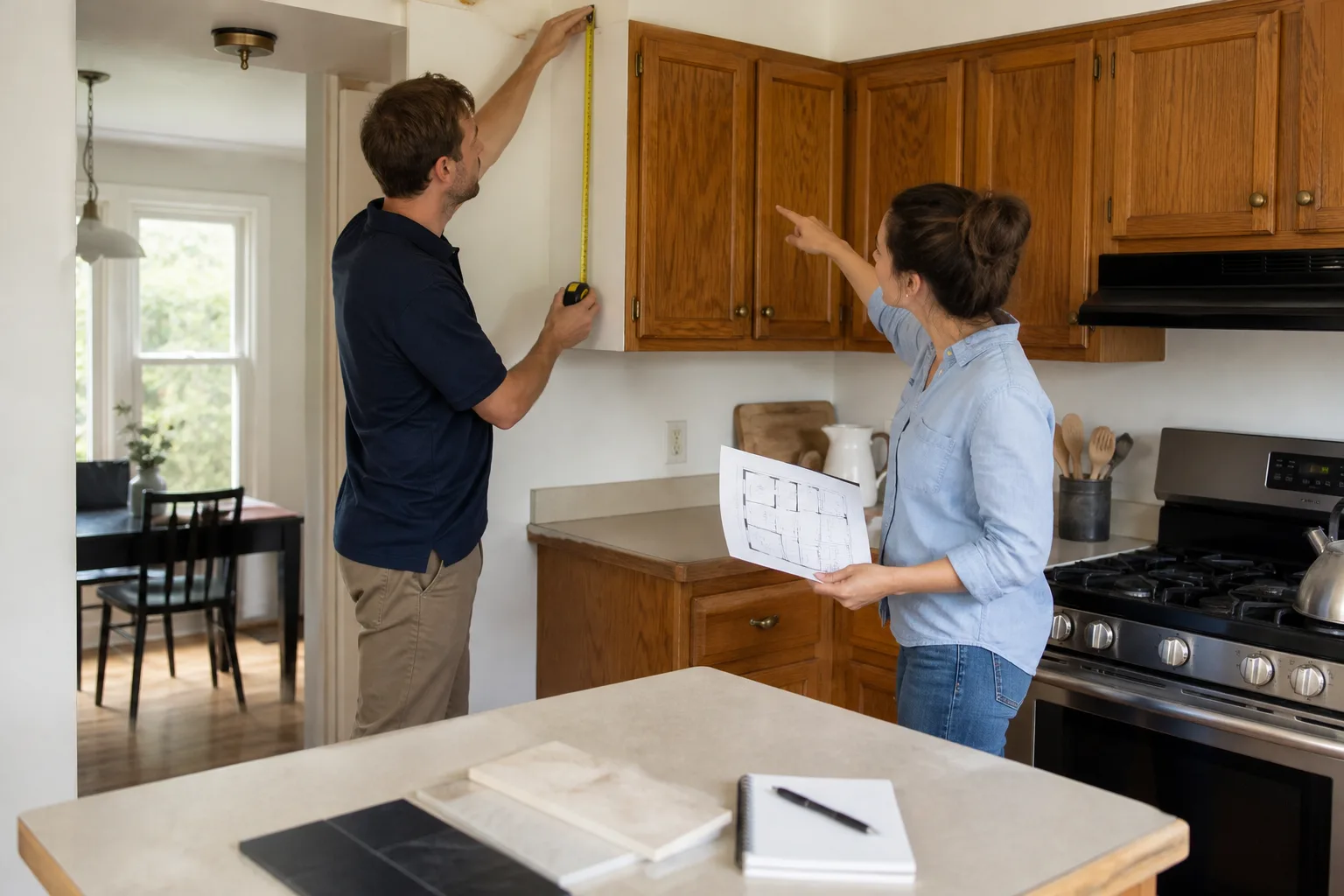
- Get the pro’s scope in writing. Have the plumbing, electrical, waterproofing, and structural work quoted as a discrete package with a written price before any work starts.
- Schedule the pro work first. Rough plumbing, electrical, framing, and waterproofing go in before any finishes.
- Do the cosmetic finishes yourself. Painting, tile setting on a waterproofed substrate, caulking, fixtures, and hardware.
- Hold the final inspection before closing up. A permitted job ends with an inspection. Don’t skip it.
- Leave the door open for a fix. Concrete, a written guarantee on the work means you’re covered if something goes wrong after the job closes.
That split usually saves a meaningful chunk of the labor cost on a typical Whitney bathroom without putting the waterproofing or the permits at risk. If you’d rather take on a bigger share, our kitchen remodeling in Whitney page covers the parallel logic for kitchens, where the same risk-tier approach applies to cabinets and counters.
Why Whitney’s Climate Makes Waterproofing Matter More
Whitney sits in the Las Vegas Valley, and the local climate shapes how a bathroom fails. The combination of very dry air and seasonal temperature swings does a few specific things. Dry air pulls moisture out of wood framing fast, so a slow leak under a shower pan may not cause visible warping for months – by the time you smell it or see a stain on the ceiling below, the damage has spread. Seasonal temperature swings also cause tile and grout to expand and contract, which can open hairline cracks in a shower that wasn’t waterproofed properly. Both of those are arguments for getting the membrane and the pan right the first time, and for not attempting them casually. It’s also why we look at the waterproofing and the subfloor before we quote any tile.
Common Mistakes to Avoid
- Skipping the permit to save time. In Clark County, unpermitted plumbing or electrical work can void homeowner coverage and complicate a sale. Pulling the permit is the cheap part of the job.
- Tiling over a shower pan you built without a flood test. A flood test takes 24 hours and catches the leaks that would otherwise show up six months later.
- Assuming “cosmetic” means “no prep.” Painting over mildew or caulking over a wet joint traps moisture. Prep is where a DIY paint job succeeds or fails.
- Moving a toilet to gain a few inches of space without checking the drain slope. A short, badly sloped drain clogs, and redoing it means opening the floor.
- Installing a new vanity without shutting off and confirming the supply valves. A stuck valve behind a new cabinet is a small leak with a large repair.
- Buying tile before checking the layout and the substrate. A dry-laid tile layout on the floor first will tell you whether the plan works before you open a bag of thinset.
- Treating an older Whitney home like a new build. Homes built before the 1990s often have older drain materials and framing that need a closer look before a remodel starts.
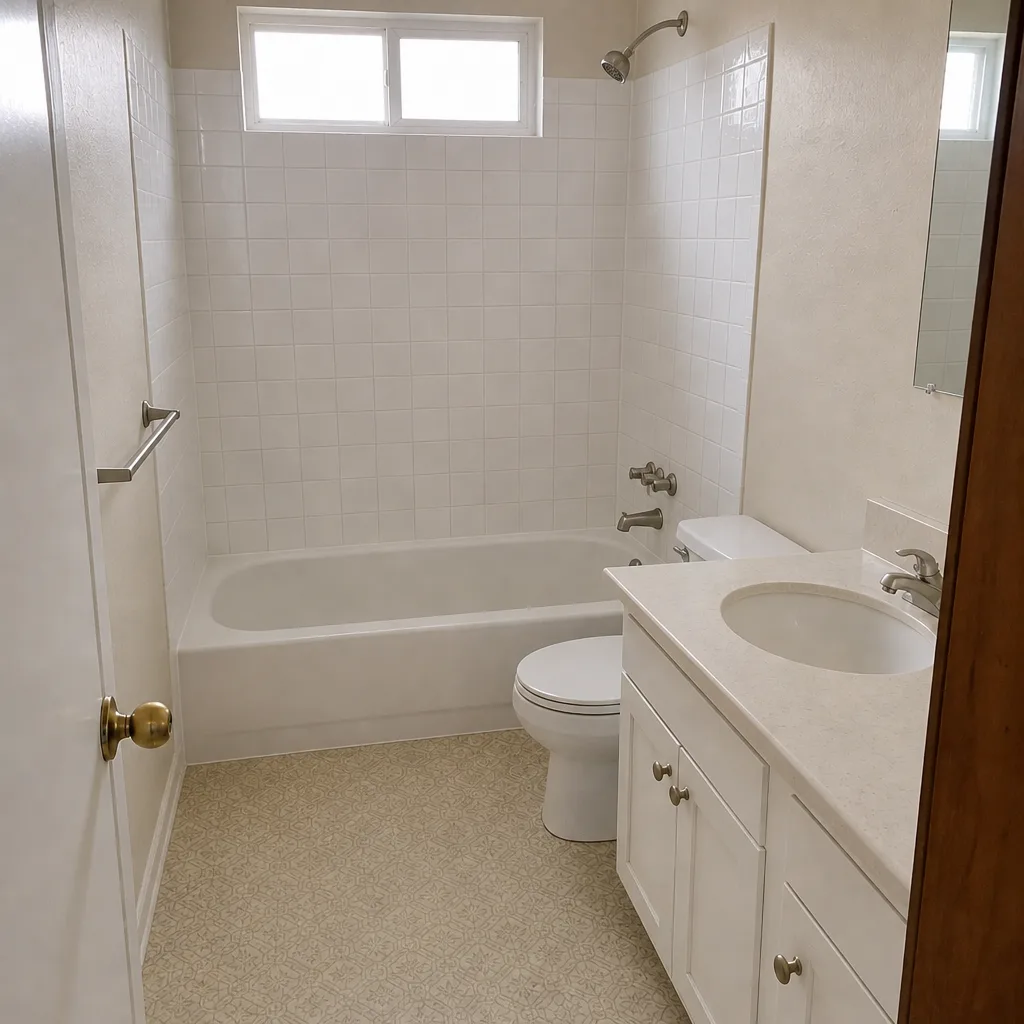
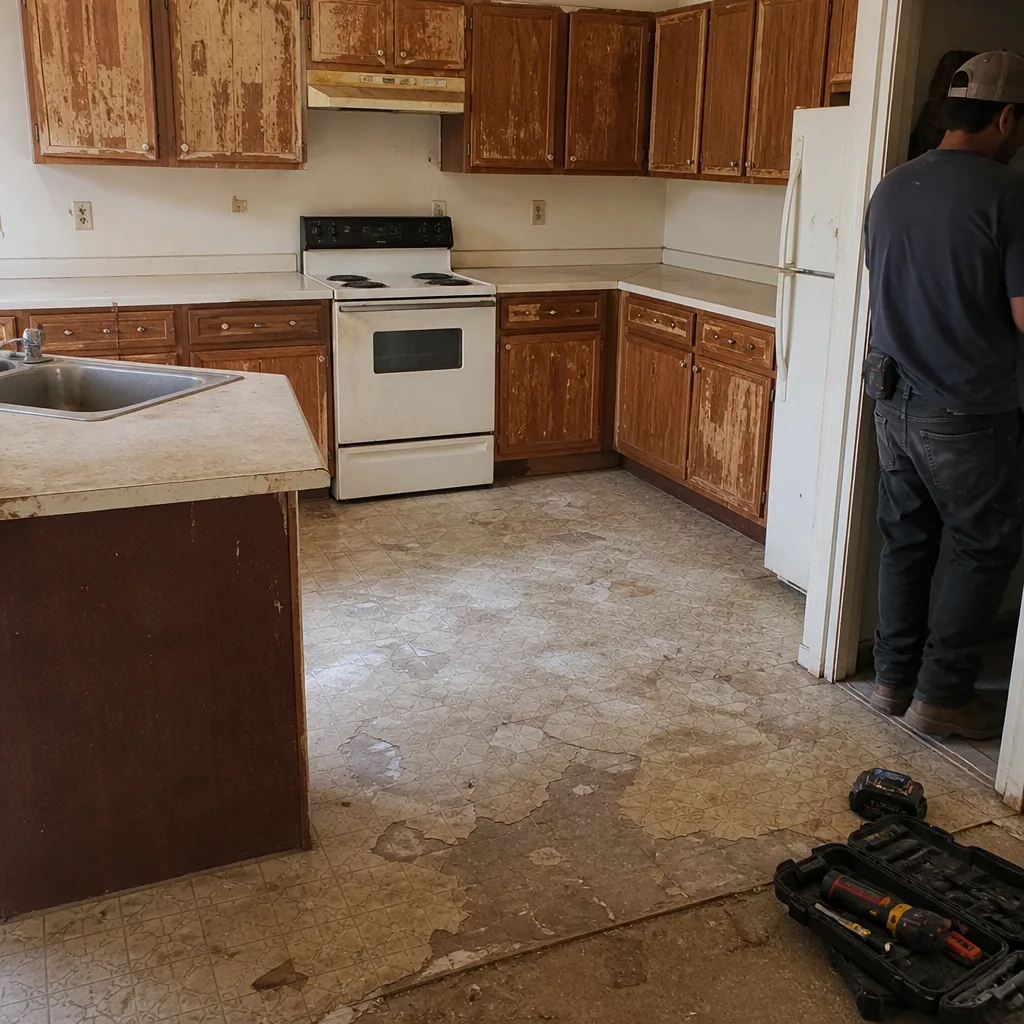
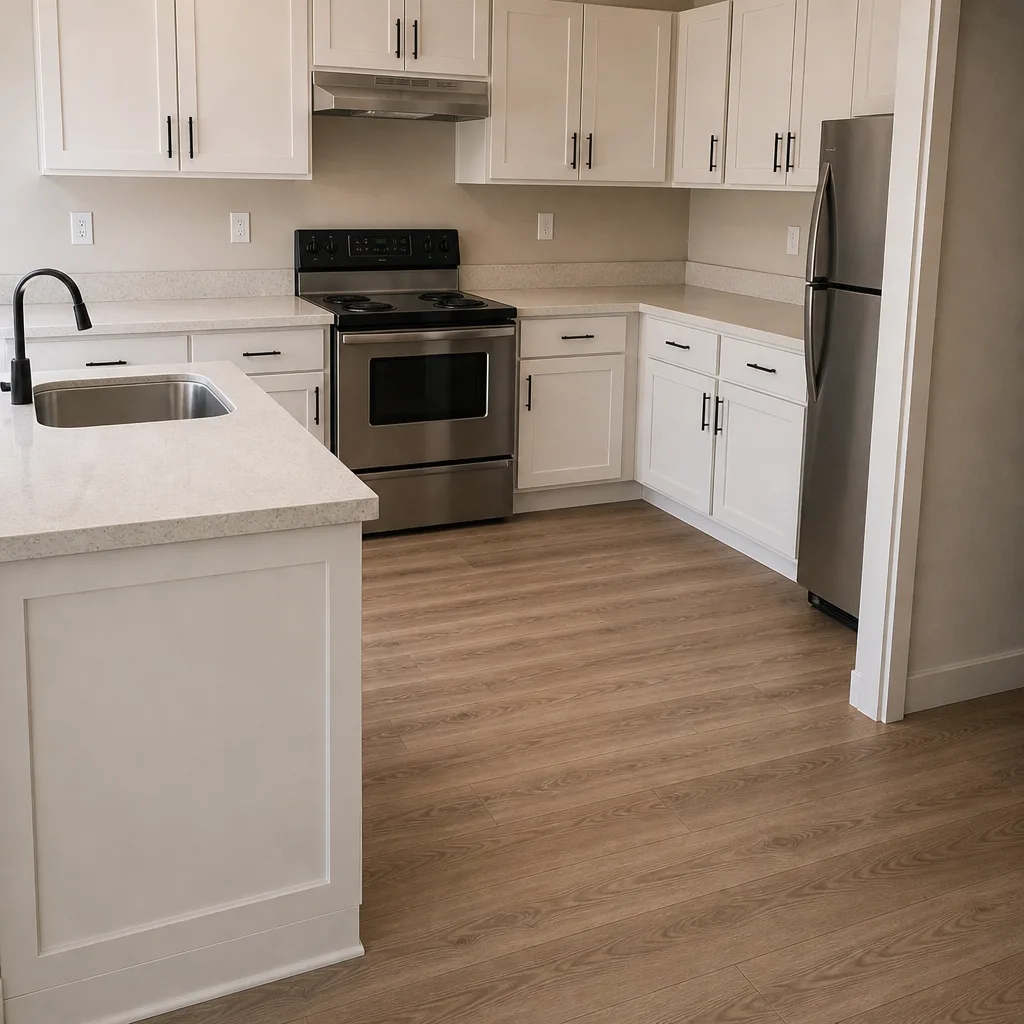
See the difference
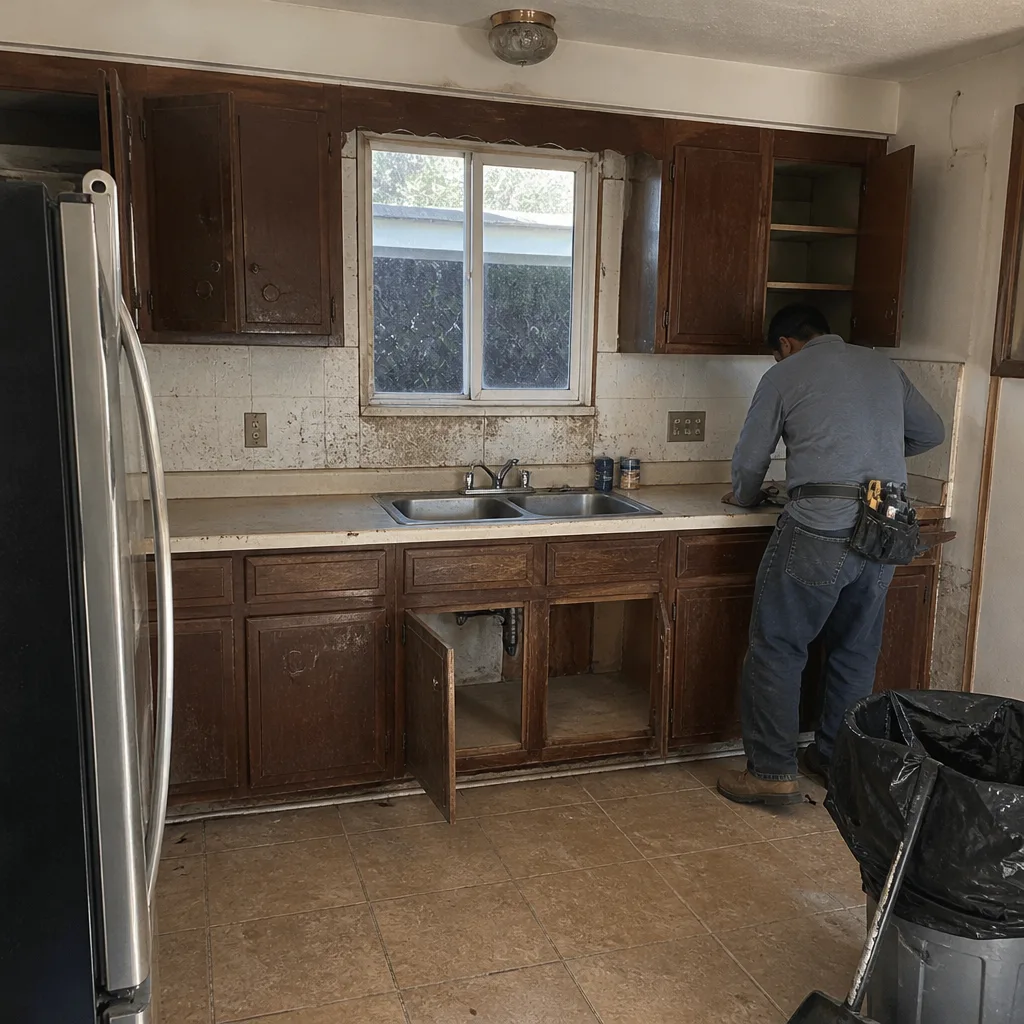 Before
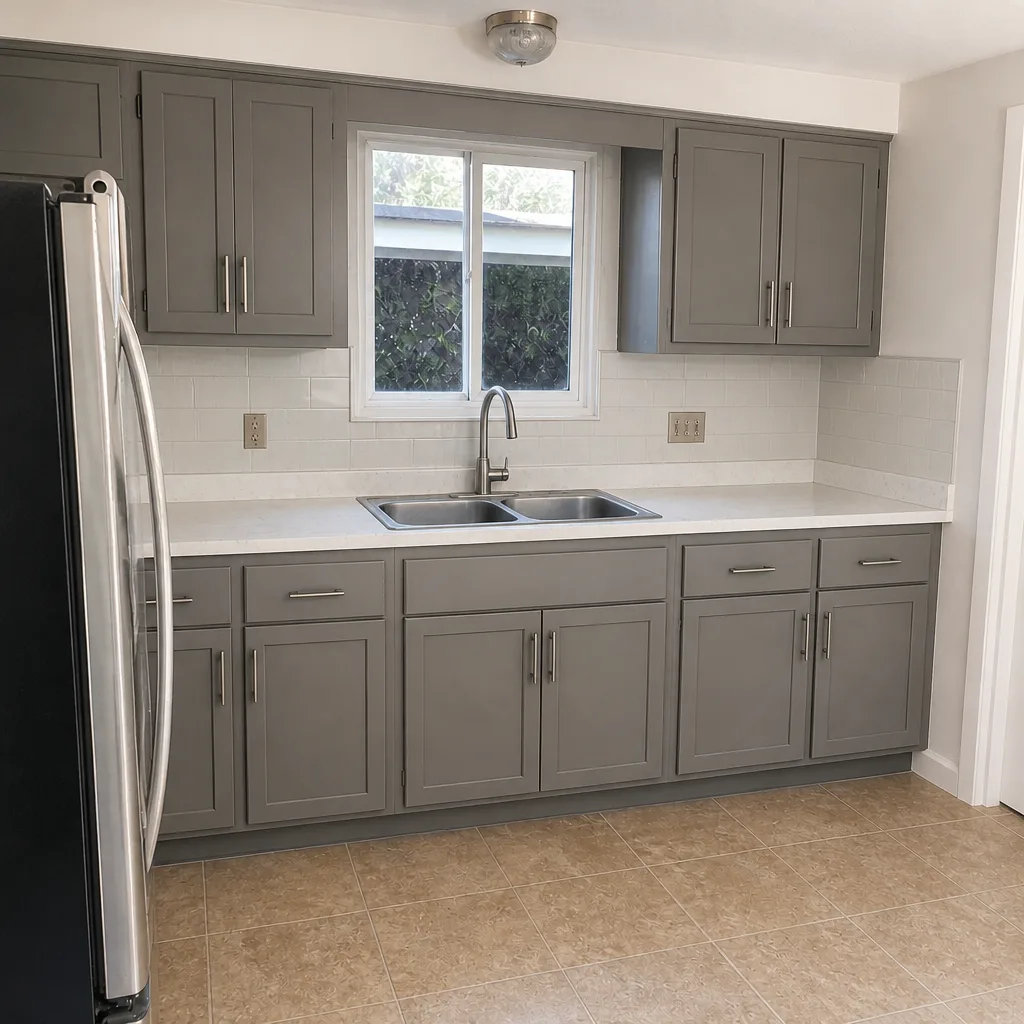 After
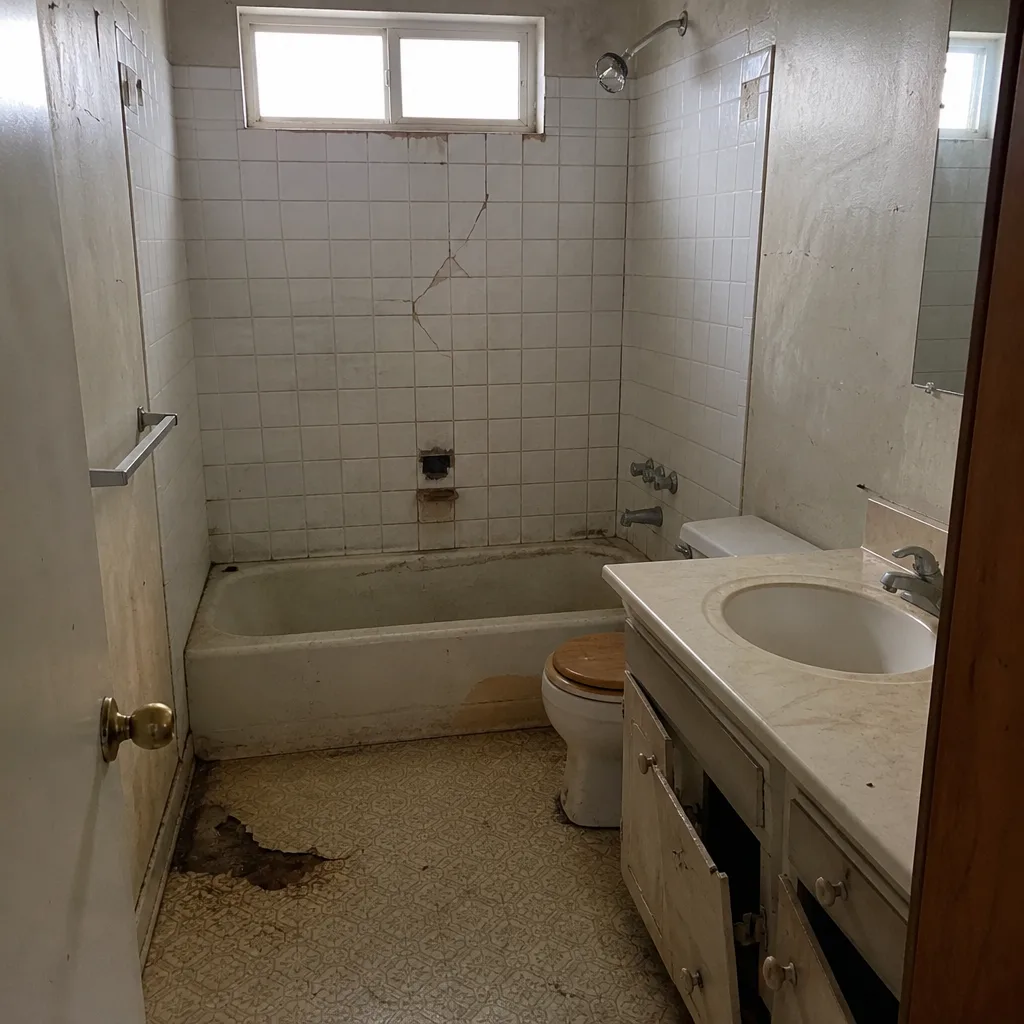 Before
 After
 Before
 After
When to Call a Professional
Call a licensed professional when the task falls into Tier 3 – anything that moves water, electricity, or structure, or anything that needs a permit in Clark County. That includes relocating or adding a drain or supply line, moving a toilet, adding or moving electrical near water, removing or altering a wall, and changing the framing around a shower or tub. Also call a pro if the waterproofing or shower pan fails a flood test, if you discover old water damage behind the tile, or if a previous DIY job has started showing stains or soft spots. Our team at Sawyer Remodeling Whitney offers free estimates in Whitney – call (833) 570-8789 to schedule one. You get a written price before any work starts, and the number on the invoice is the number you approved.
Frequently Asked Questions
DIY is cheaper on cosmetic tasks – painting, caulking, swapping hardware – and usually more expensive on plumbing, electrical, and waterproofing once you account for the cost of fixing a failed attempt. The best value is usually a hybrid: hire the licensed pro for the high-consequence work, and do the finishes yourself.
Yes, for most plumbing, electrical, and structural changes. Clark County requires permits for moving or adding plumbing lines, new electrical circuits, moving a toilet, removing or altering a wall, and changing the framing around a shower or tub. Cosmetic swaps generally don’t require one. Call (833) 570-8789 to talk through whether your specific project needs a permit – estimates are free.
You can set the surface tile if the waterproofing and pan were built correctly by someone who knows how. Building the shower pan and waterproofing is the part most homeowners should hand off – a failed membrane is the most expensive DIY mistake we see, and it’s invisible until the damage is done.
A full bathroom remodel in the Whitney market typically runs in the range of $12,000 to $35,000 depending on size, fixture quality, and whether the layout is changing. A partial remodel – finishes only – runs lower. Call (833) 570-8789 for a written line-item quote for your specific project; estimates are free.
Unpermitted plumbing, electrical, or structural work is commonly excluded from homeowner coverage, and a leak from unpermitted work can be denied. That’s the real risk of DIY in the permit-and-consequence tier – not the work itself, but the coverage gap if it fails. Call (833) 570-8789 to confirm what needs a permit for your project.
Painting is the highest-value, lowest-risk DIY task in a bathroom, followed by recaulking the tub and shower perimeter and replacing the mirror and hardware. All three are fully reversible and don’t touch anything behind the wall. For the rest of the scope, our Sawyer Remodeling Whitney home page has an overview of how we plan projects from the first walkthrough to the final photo update.
The Bottom Line
The DIY vs. professional decision for a bathroom isn’t about skill. It’s about consequence. Cosmetic finishes – paint, caulk, hardware, a vanity top on an existing cabinet – are safe to do yourself and save real money. Waterproofing, tile over a wet area, and every change to plumbing, electrical, or structure are the tasks with hidden downstream costs, and in Clark County they require a licensed contractor and a permit. The most cost-effective approach in Whitney is the hybrid: hand the high-consequence work to a licensed pro and take on the finishes yourself. Every Sawyer Remodeling Whitney project comes with a written price before work starts and a written guarantee. Call (833) 570-8789 today to schedule a free estimate – we’ll price the whole scope in writing so you know exactly which parts are worth doing yourself.
Written by the team at Sawyer Remodeling Whitney.